The Sanssouci Palaces and Parks in Potsdam, Germany, represent one of Europe’s finest royal landscapes. Often described as the “Prussian Versailles”, this UNESCO World Heritage Site encompasses magnificent palaces, terraced vineyards, ornamental gardens, fountains, temples and picturesque pathways spread across nearly 300 hectares. Located on the fringes of Berlin, the complex served as the summer retreat of Frederick the Great, King of Prussia, and remains one of Germany’s most visited cultural landmarks. I spent half a day exploring this sprawling complex and was impressed by its scale, architectural styles and lavish interiors.

The name Sanssouci comes from the French phrase meaning “without worries,” reflecting Frederick’s desire for a peaceful refuge away from the formal pressures of court life. Today, visitors can explore a remarkable collection of royal residences and landscaped gardens that showcase more than two centuries of Prussian history.
The best way to visit Sanssouci
The Sanssouci complex is one of the top things to see in Potsdam. It’s possible to visit the complex as a day trip from Berlin. However, I recommend spending 1-2 nights in Potsdam to allow yourself more time as there’s just so much to see, both in the city centre and the Sanssouci complex. Whether you’re interested in art, architecture, history, or simply enjoying nature, Sanssouci is absolutely worth visiting and exploring at a slower pace.
I suggest purchasing a day ticket to gain access to the palaces. Keep in mind that entrance to Sanssouci Palace is restricted to time slots. The other palaces and monuments can be visited at your leisure. It’s a vast complex that requires quite a bit of walking – I clocked up about 7km (4+ miles). I recommend bringing water and snacks with you as there are only a handful of eateries. Furthermore, they’re all located at the edges of the complex.
Highlights of Sanssouci – a walking tour
My suggested Sanssouci walking route covers the main sights. There are two add-on routes which you can choose to follow if you have more time to spare. The descriptions below follow the sequence of my walking route.
- Start your walk at the Emperor Frederick Mausoleum.
- Continue through the park to the Sanssouci Palace – I recommend booking the earliest possible time slot (10am).
- After touring the palace, walk down to the historic windmill and pass the New Chambers.
- Then cross the Sicilian gardens and the park to the Chinese House.
- Option 1: If you have time to spare, head to the Roman Baths and continue to the Charlottenhof Palace.
- Or head directly to the New Palace from the Chinese House.
- From the New Palace, you can catch the train from Park Sanssouci station to Potsdam Hbf (central station, for trains back to Berlin); or take bus 695 at Maulbeerallee to the Potsdam city centre.
- Option 2: If you have more time, continue from the New Palace to the Orangery Palace, stopping along the way at the Botanical Gardens.
- NOTE: as at June 2026, the Roman Baths and Orangery Palace are closed for renovations.
Emperor Frederick Mausoleum
One of the lesser-known yet historically significant landmarks within Sanssouci Park is the Emperor Frederick Mausoleum (Kaiser-Friedrich-Mausoleum). Located adjacent to the Friedenskirche (Church of Peace), the mausoleum was built between 1888 and 1890 as the final resting place of Emperor Frederick III and his wife, Empress Victoria, the eldest daughter of Britain’s Queen Victoria.
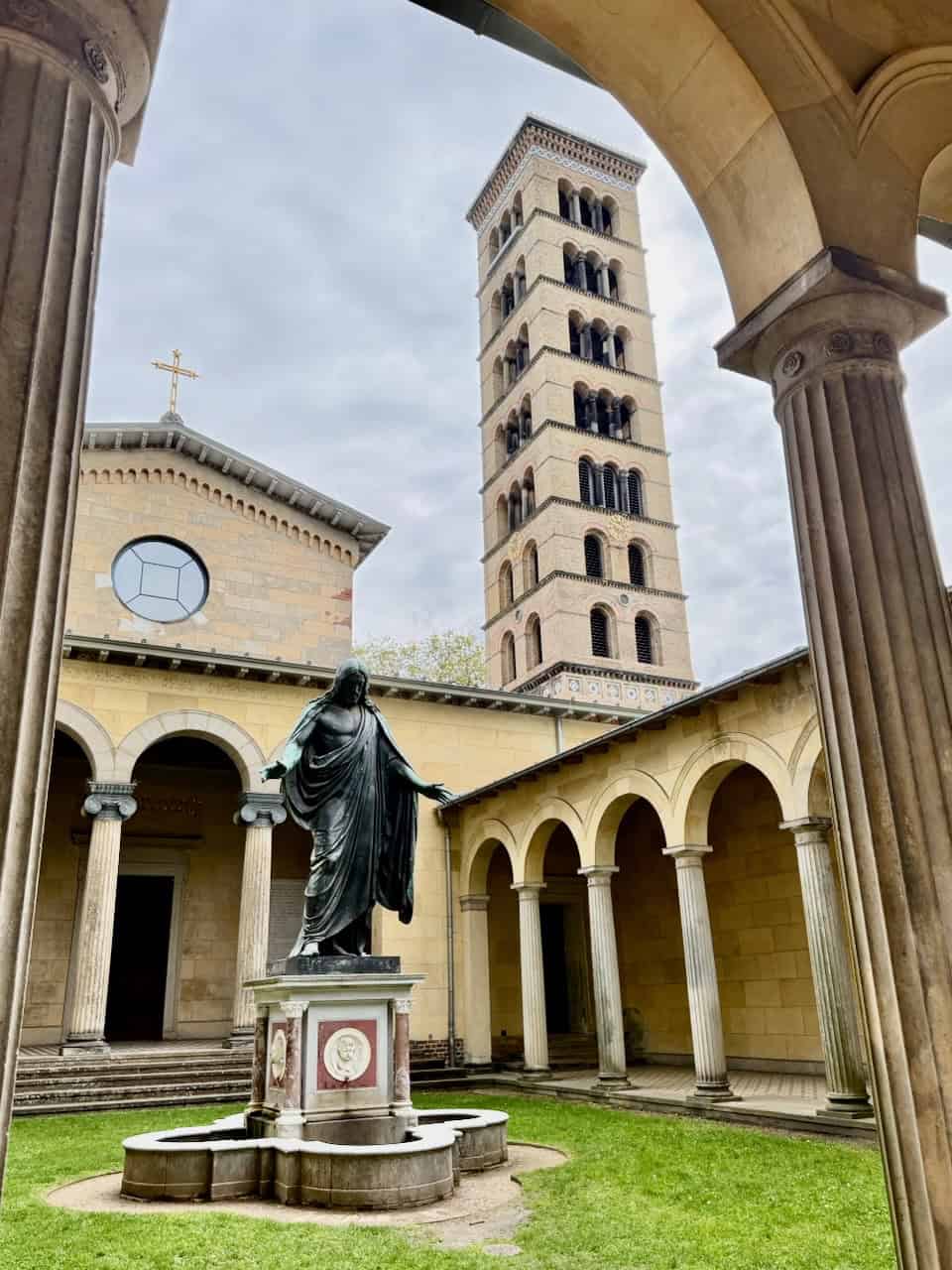
Frederick III occupies a unique place in German history. Often remembered as the “99-Day Emperor”, he reigned for only ninety-nine days in 1888 before succumbing to throat cancer. Historians have long speculated that had he lived longer, Germany might have followed a more liberal political path. His wife Victoria shared his constitutional and reform-minded ideals, making the couple popular among those who hoped for a more progressive German Empire.
Designed in an Italian Renaissance style, the mausoleum blends harmoniously with the surrounding architecture of the Friedenskirche complex. Inside, you can admire elegant marble sarcophagi and finely crafted sculptures. The atmosphere is notably serene and reflective, offering a striking contrast to the grandeur of the royal palaces in the park.
Sanssouci Palace
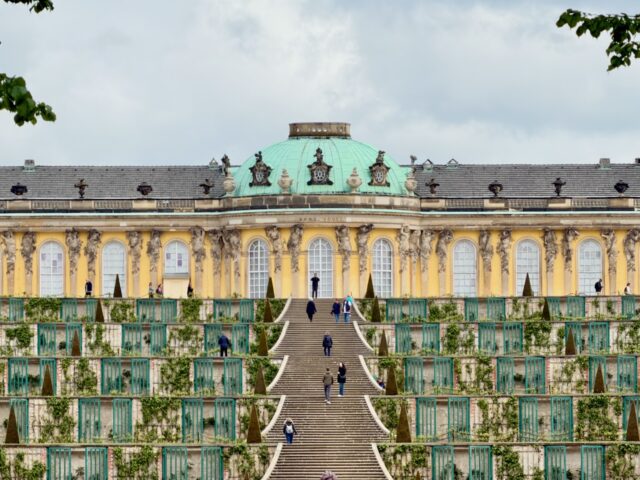
At the heart of the complex stands Sanssouci Palace, the elegant Rococo residence built between 1745 and 1747. Unlike many European royal palaces designed to impress foreign dignitaries, Sanssouci was conceived as an intimate retreat where Frederick the Great could relax, write philosophy, play music and host close friends.
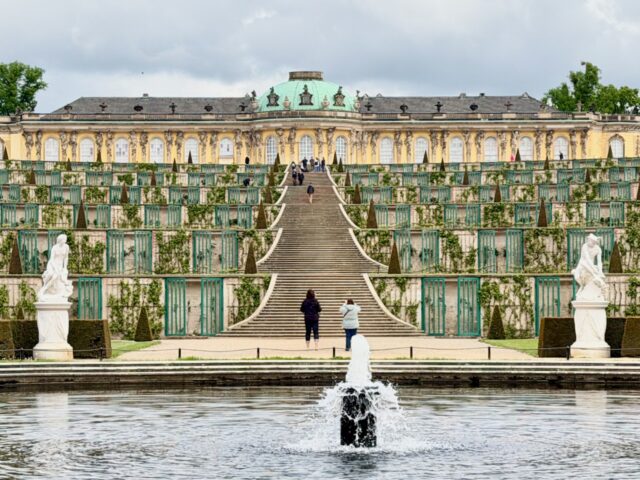
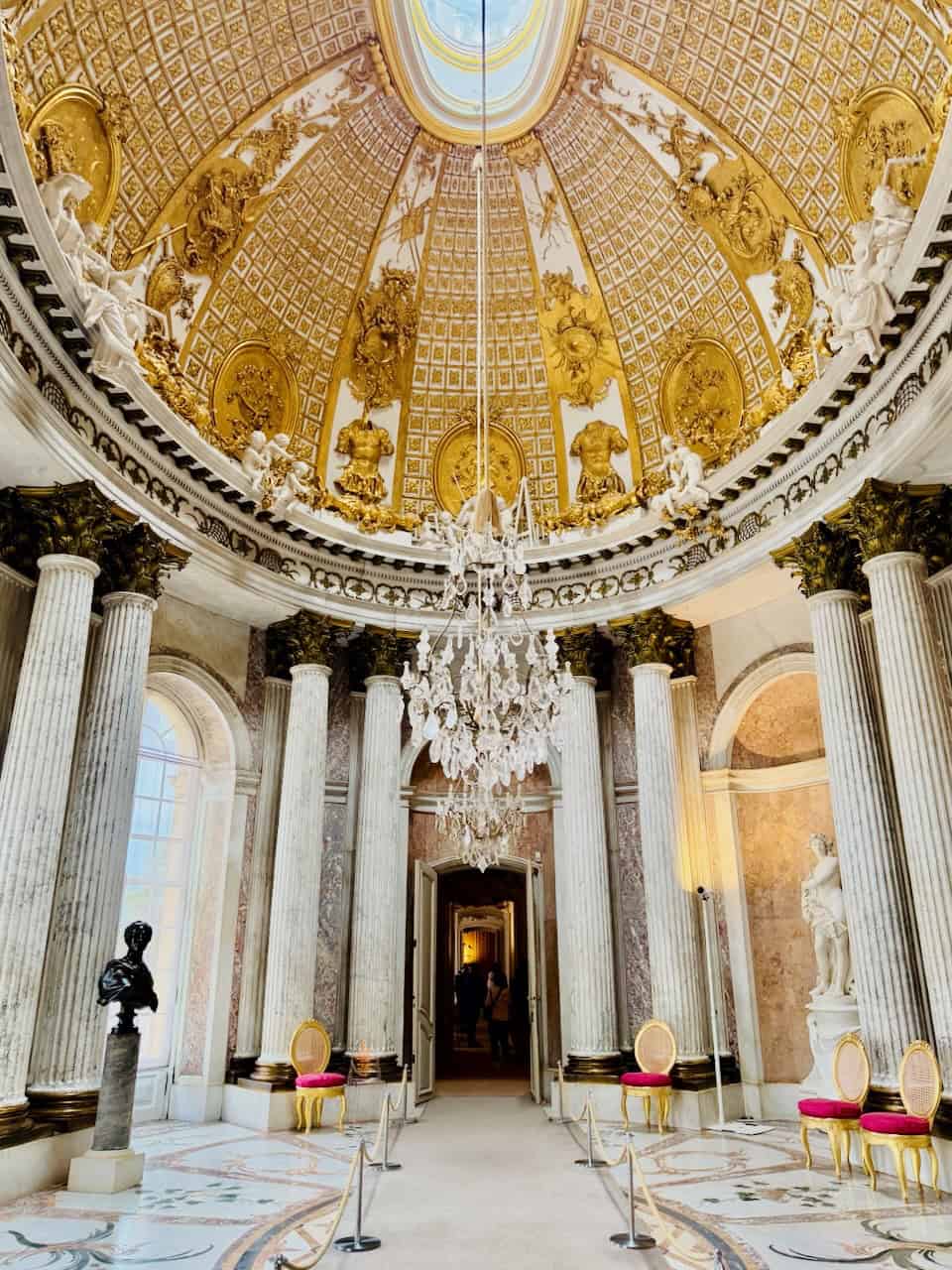
The palace sits atop a series of terraced vineyards that cascade down the hillside. Its single-storey design reflects Frederick’s preference for comfort and accessibility over grandeur. Inside, you can admire lavishly decorated rooms featuring gilded ornamentation, intricate stucco work and beautiful paintings.
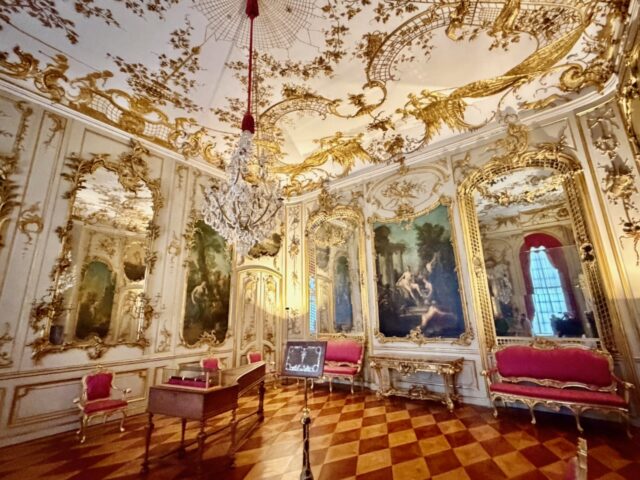
One of the palace’s most famous rooms is the Marble Hall, which served as a venue for intellectual discussions. Frederick regularly invited leading thinkers of the Enlightenment, including the French philosopher Voltaire, to stay at Sanssouci.
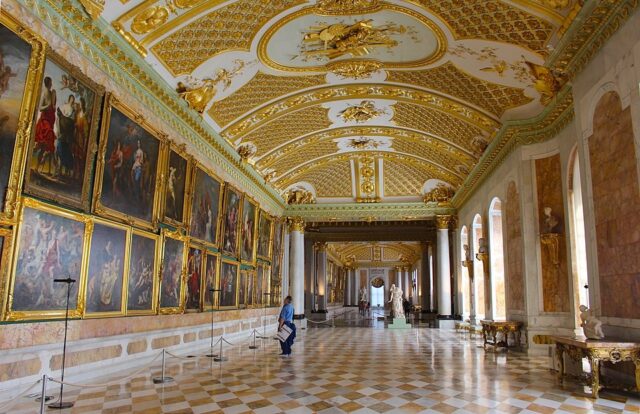
Adjacent to the palace stands the Picture Gallery (Bildergalerie), completed in 1764 and considered Germany’s oldest purpose-built museum building. In this museum, Frederick the Great displayed his prized collection of paintings by masters such as Rubens, Van Dyck and Caravaggio.
Historic windmill of Sanssouci
Standing beside the terraced vineyards below Sanssouci Palace is one of Potsdam’s most charming landmarks: the Historic Windmill (Historische Mühle von Sanssouci). The original windmill (from 1738) predated the construction of Sanssouci Palace and belonged to a local miller.
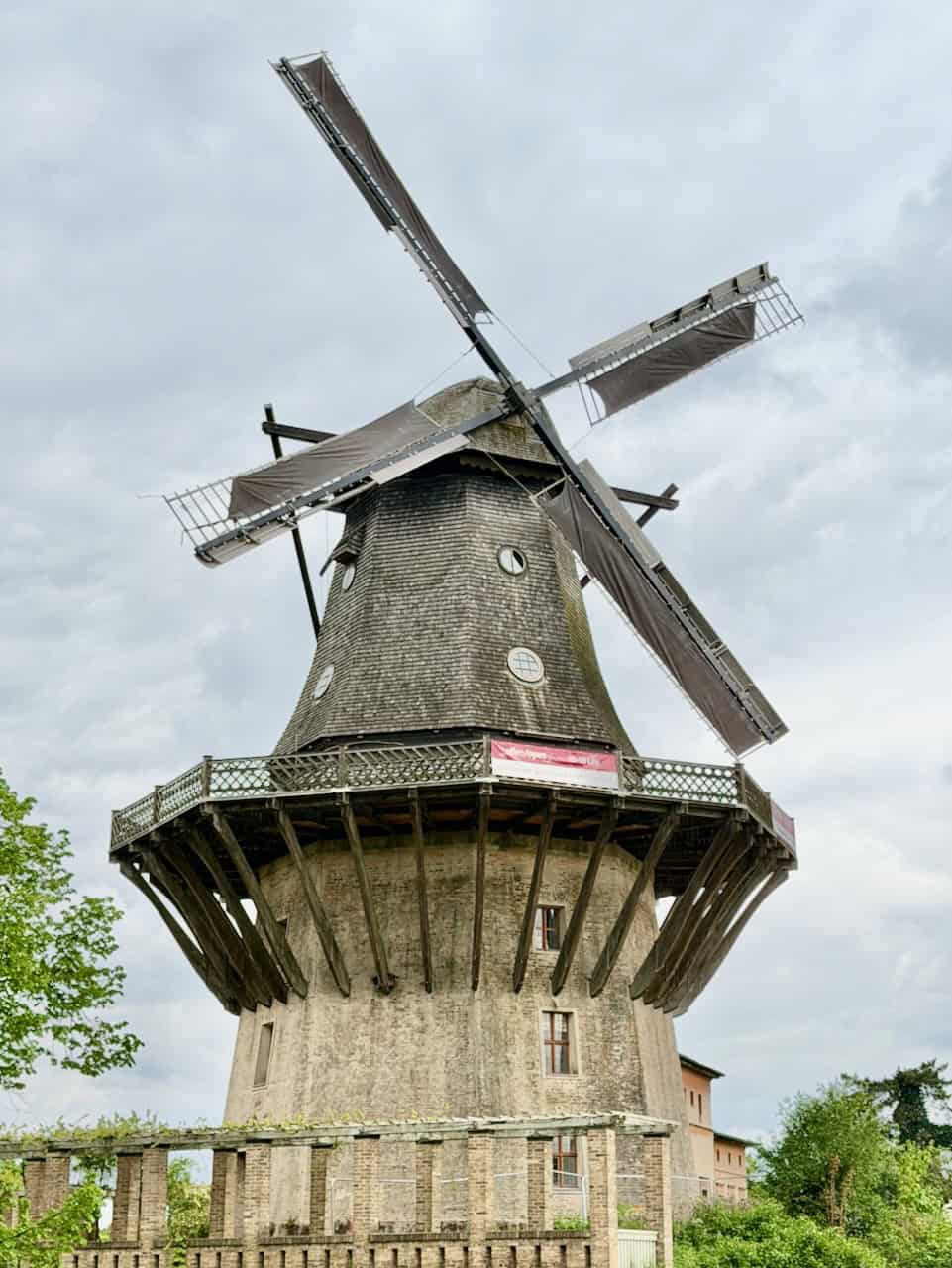
According to a famous Prussian legend, Frederick the Great became irritated by the noise generated by the mill and wished to acquire the property. When the miller refused to sell, the king allegedly threatened to use his royal authority to seize it. The miller reportedly responded, “There are still judges in Berlin,” implying that even the king was subject to the law. Whether entirely true or partly embellished, the story became a powerful symbol of justice and the rule of law in Prussia. Frederick is said to have admired the miller’s courage, and the windmill remained standing.
The windmill was demolished and rebuilt in a Dutch style in 1787. The historic mill was destroyed during WWII and a replica was completed in the 1990’s based on historical plans and illustrations. Visitors can explore the interior to learn about traditional milling techniques and the role windmills played in 18th century rural life.
Chinese House
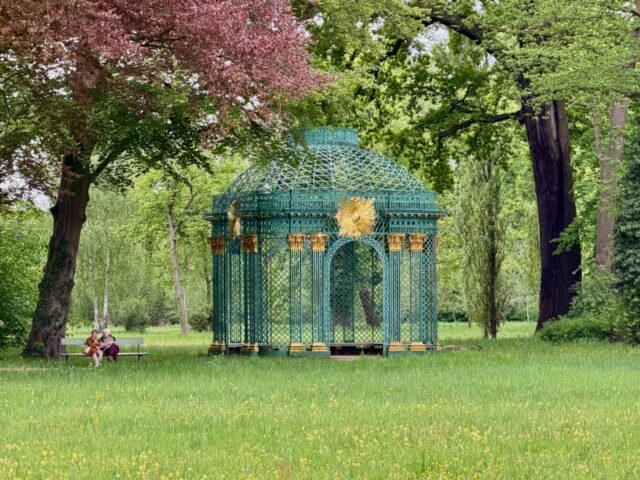
Among my favourite attractions in the park is the Chinese House, a small pavilion built between 1755 and 1764. This gilded structure exemplifies the 18th century European fascination with East Asian art and culture, known as Chinoiserie.
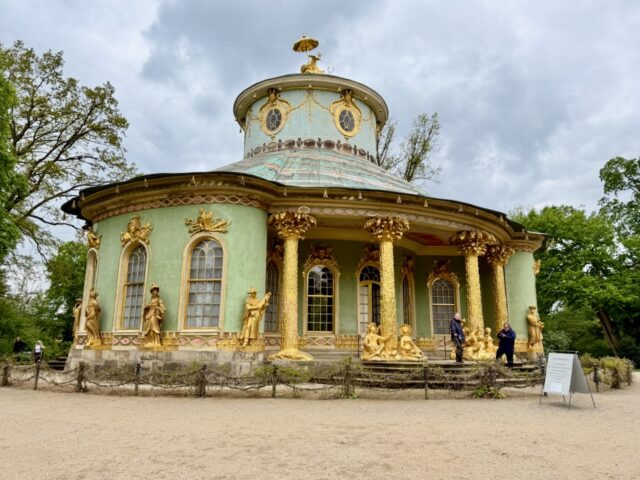
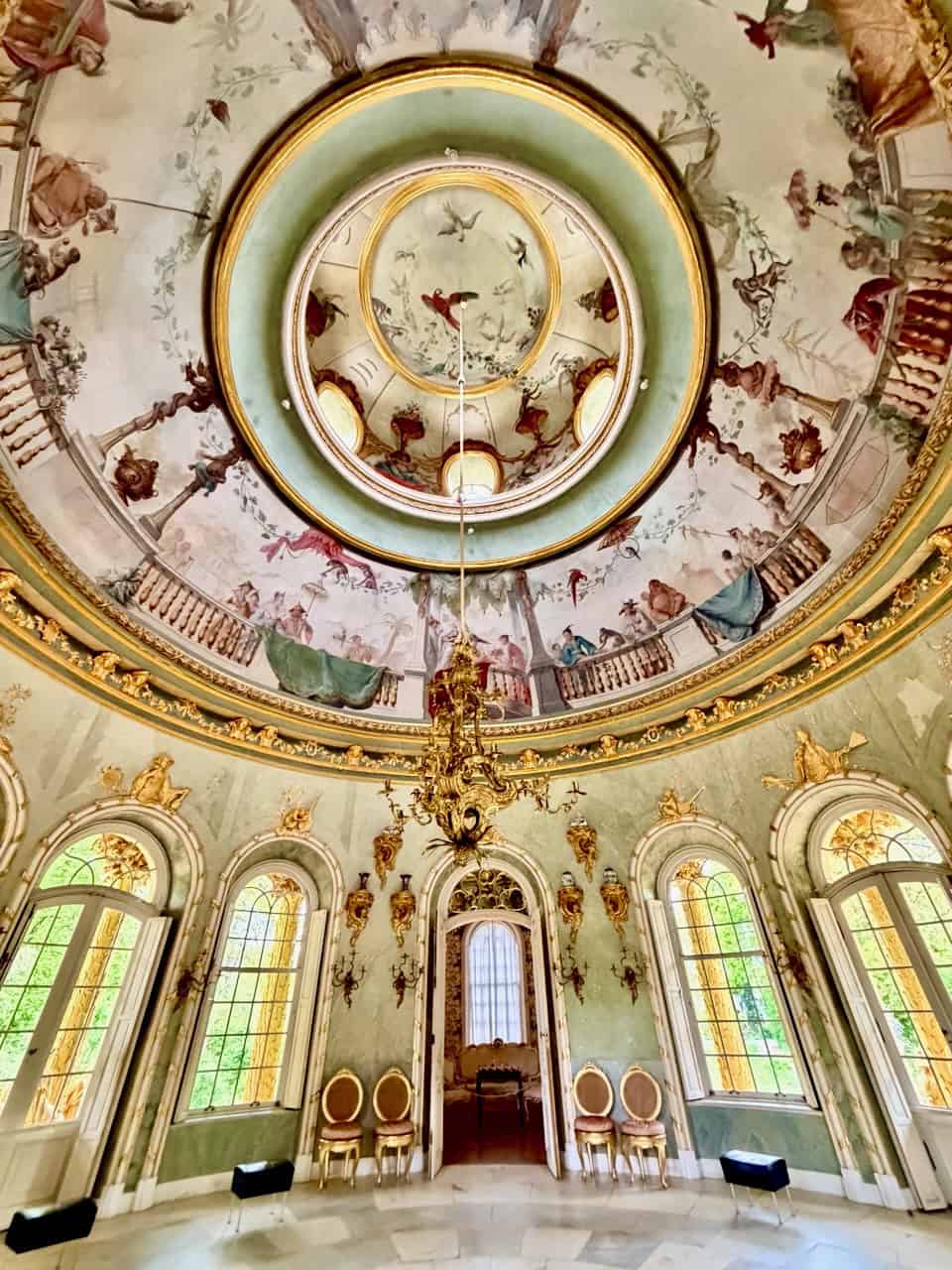
Golden statues of musicians and tea drinkers surround the building, creating an atmosphere of whimsical elegance.
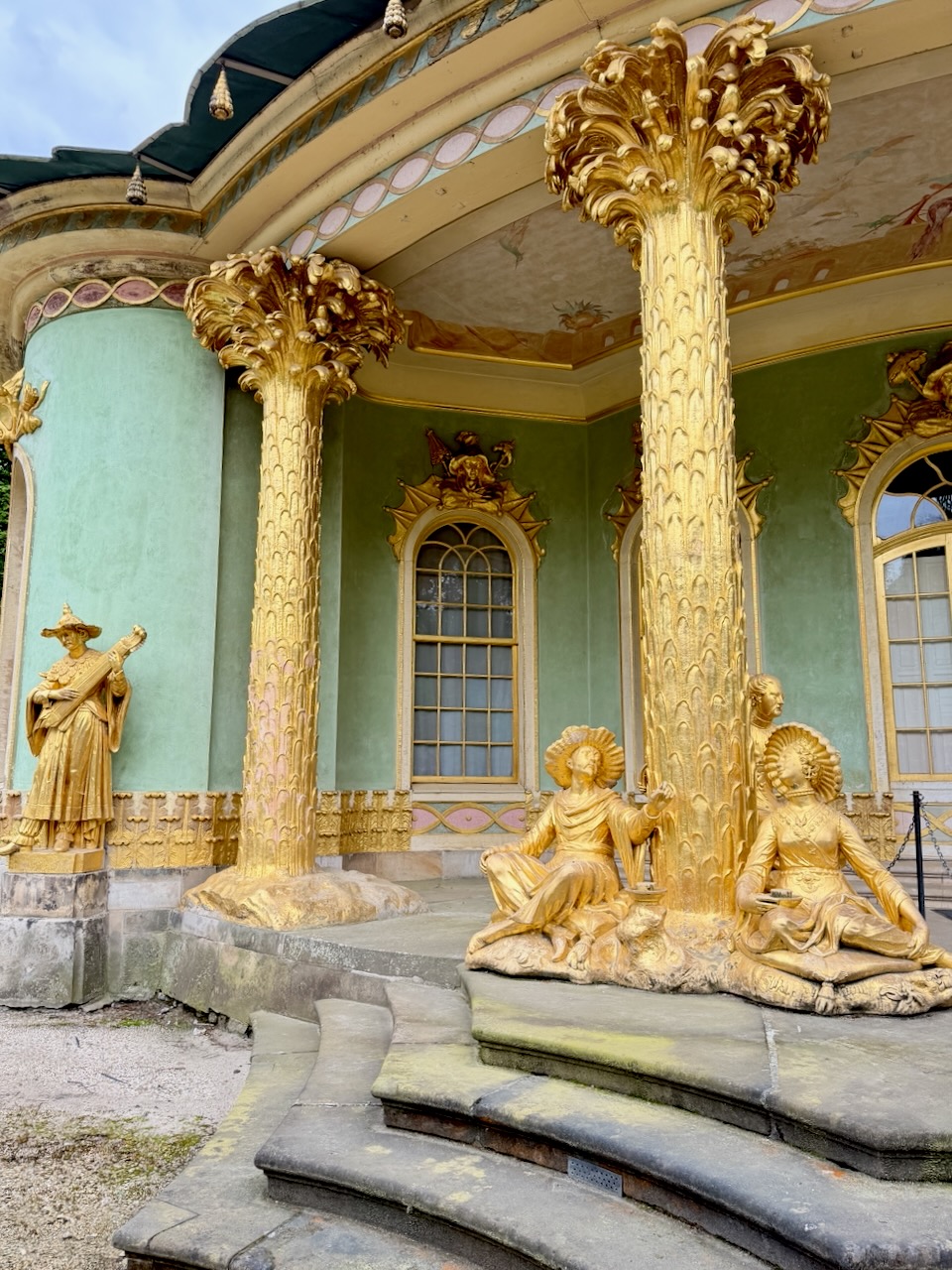
Although the design bears little resemblance to authentic Chinese architecture, it reflects the era’s fascination with distant cultures and exotic aesthetics. I found it absolutely fascinating to see how Europeans at the time viewed Eastern cultures.
The New Palace
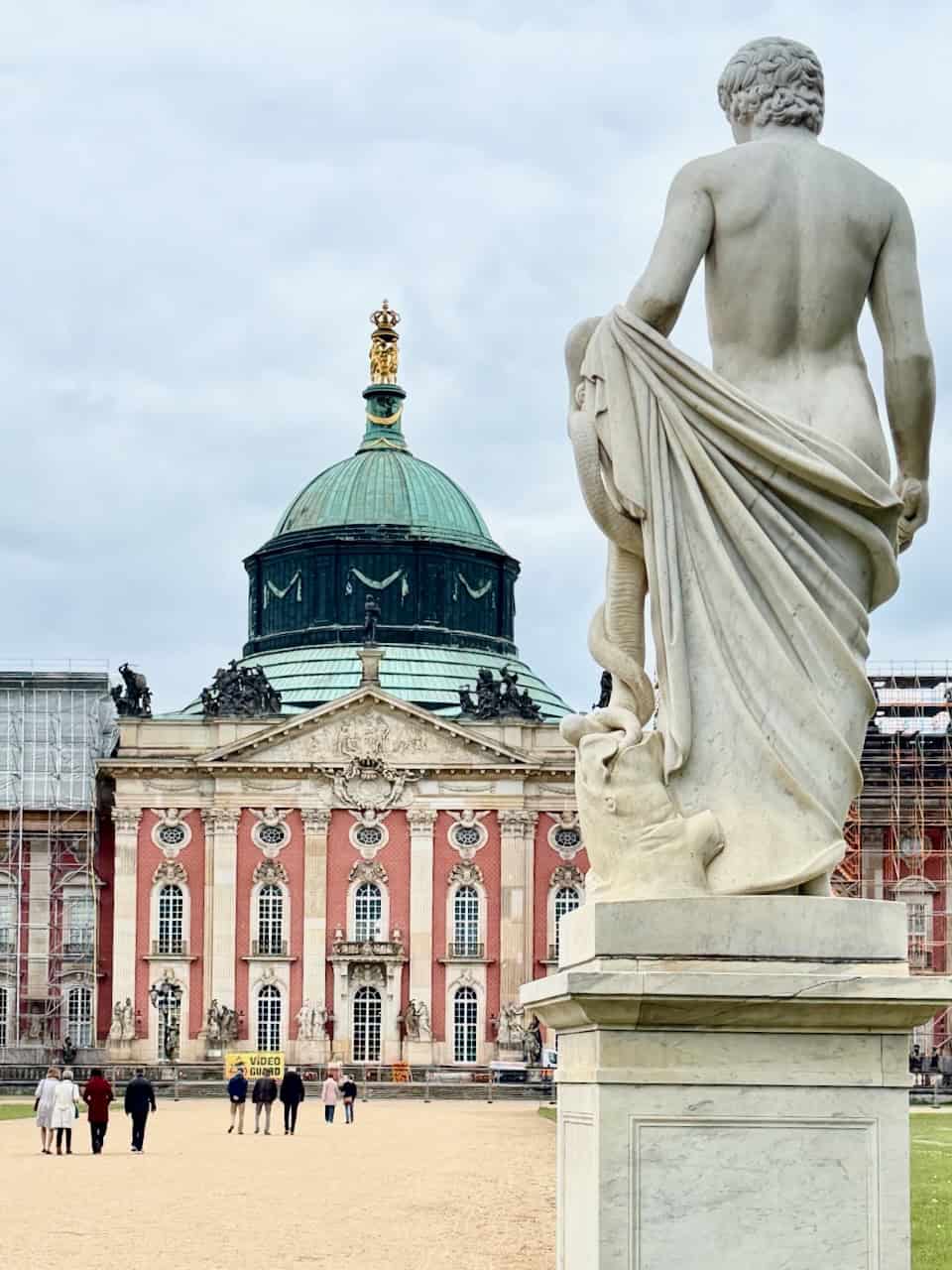
While Sanssouci Palace was designed for privacy, the Baroque-style New Palace (Neues Palais) was intended to showcase Prussia’s strength and prestige. Constructed between 1763 and 1769 after the Seven Years’ War, it served as a statement that Prussia remained prosperous despite the immense costs of the conflict. The New Palace is arguably the most impressive of the palaces in the Sanssouci complex.
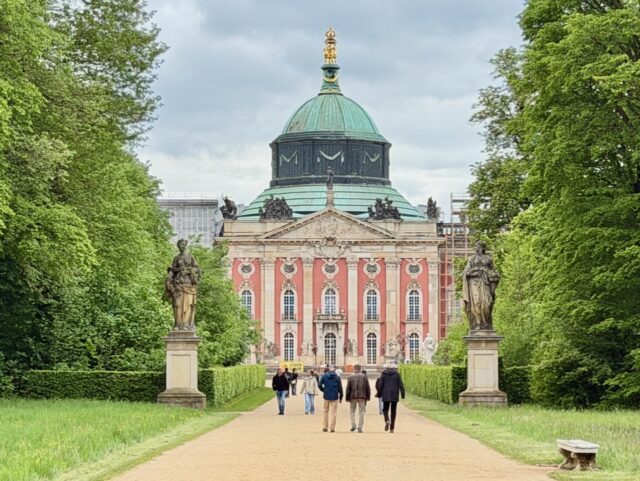
The New Palace is considerably larger and more imposing than Sanssouci. Its massive façade stretches for hundreds of meters and contains over 200 rooms. The interior is equally impressive, featuring marble halls, grand staircases, crystal chandeliers and richly decorated state apartments.
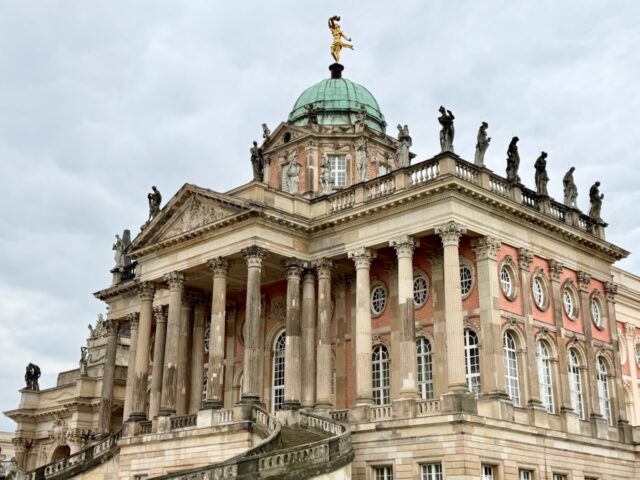
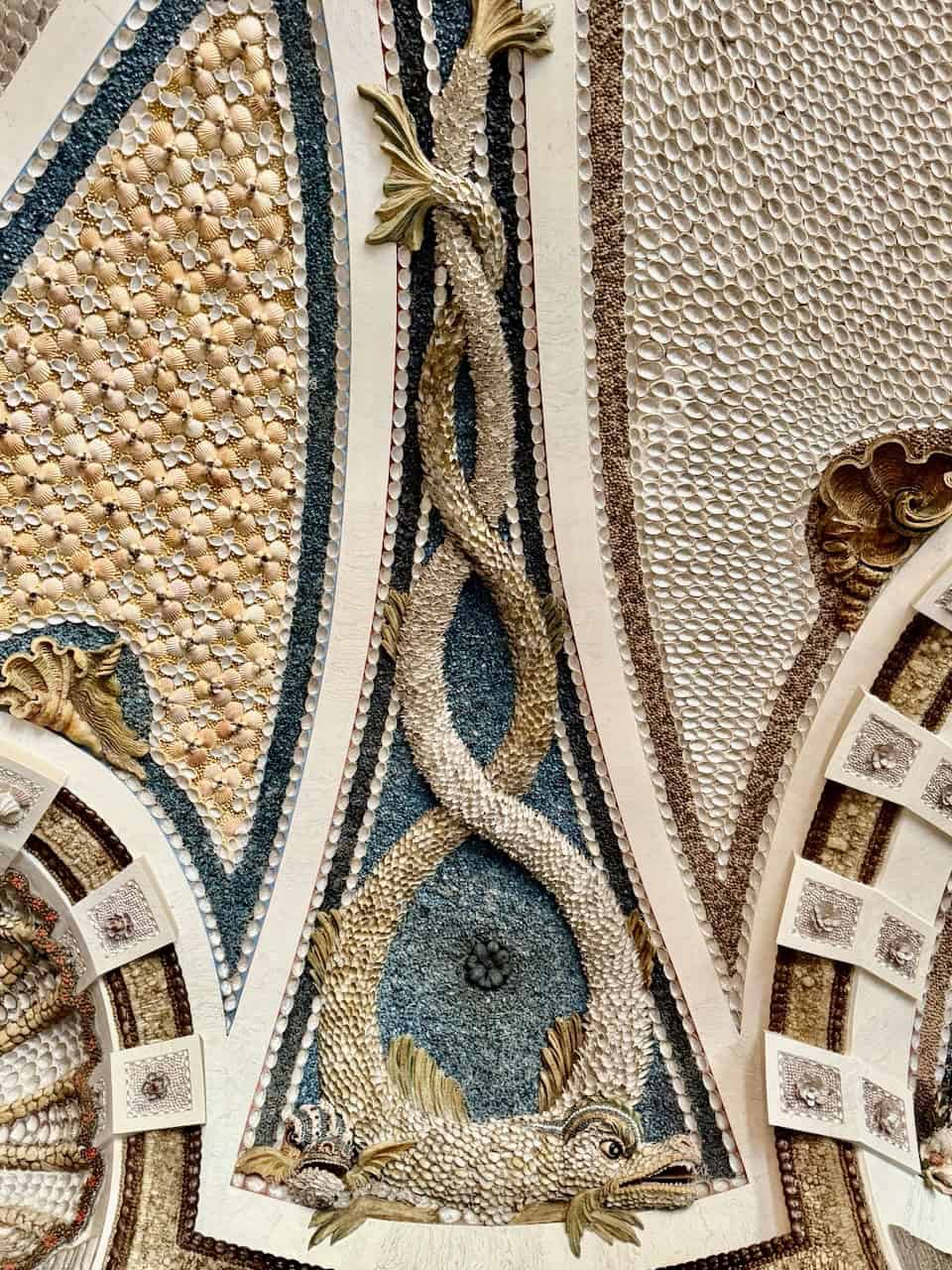
Among its highlights is the spectacular Grotto Hall (Grottensaal), whose walls are decorated with thousands of shells, minerals, and semi-precious stones. Take your time to admire the adornments made of shells and stones – the craftsmanship is absolutely astonishing.
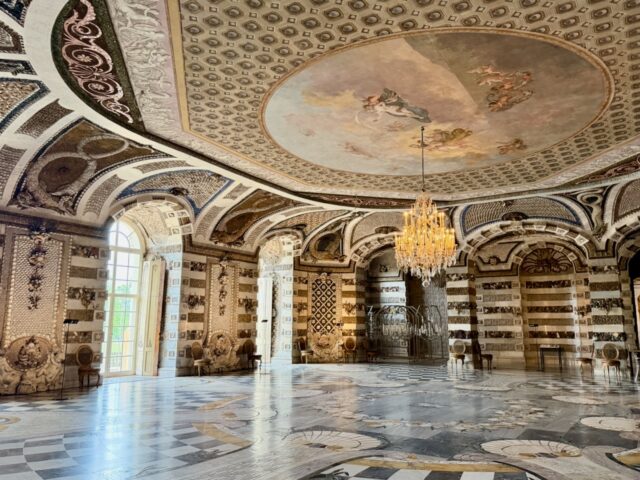
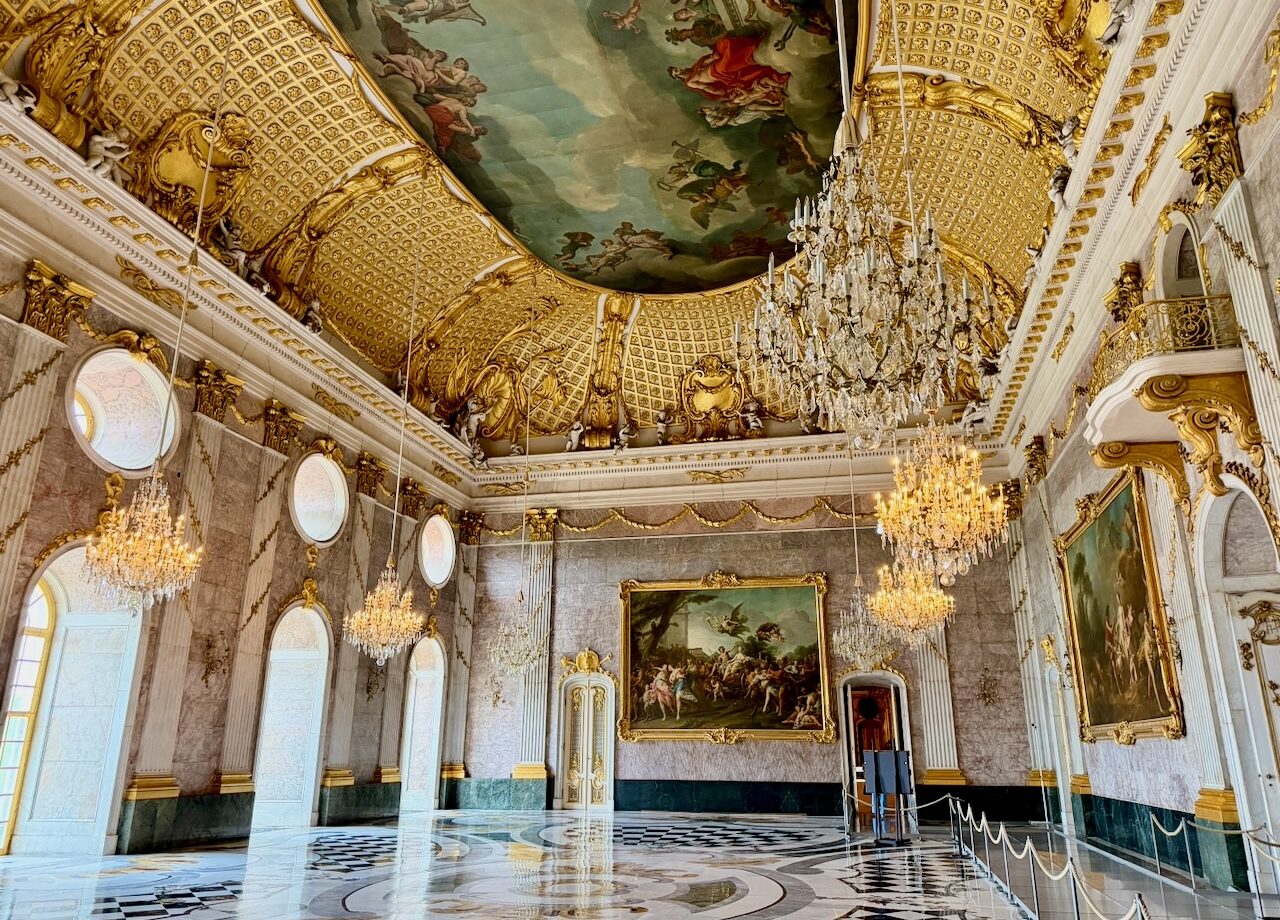
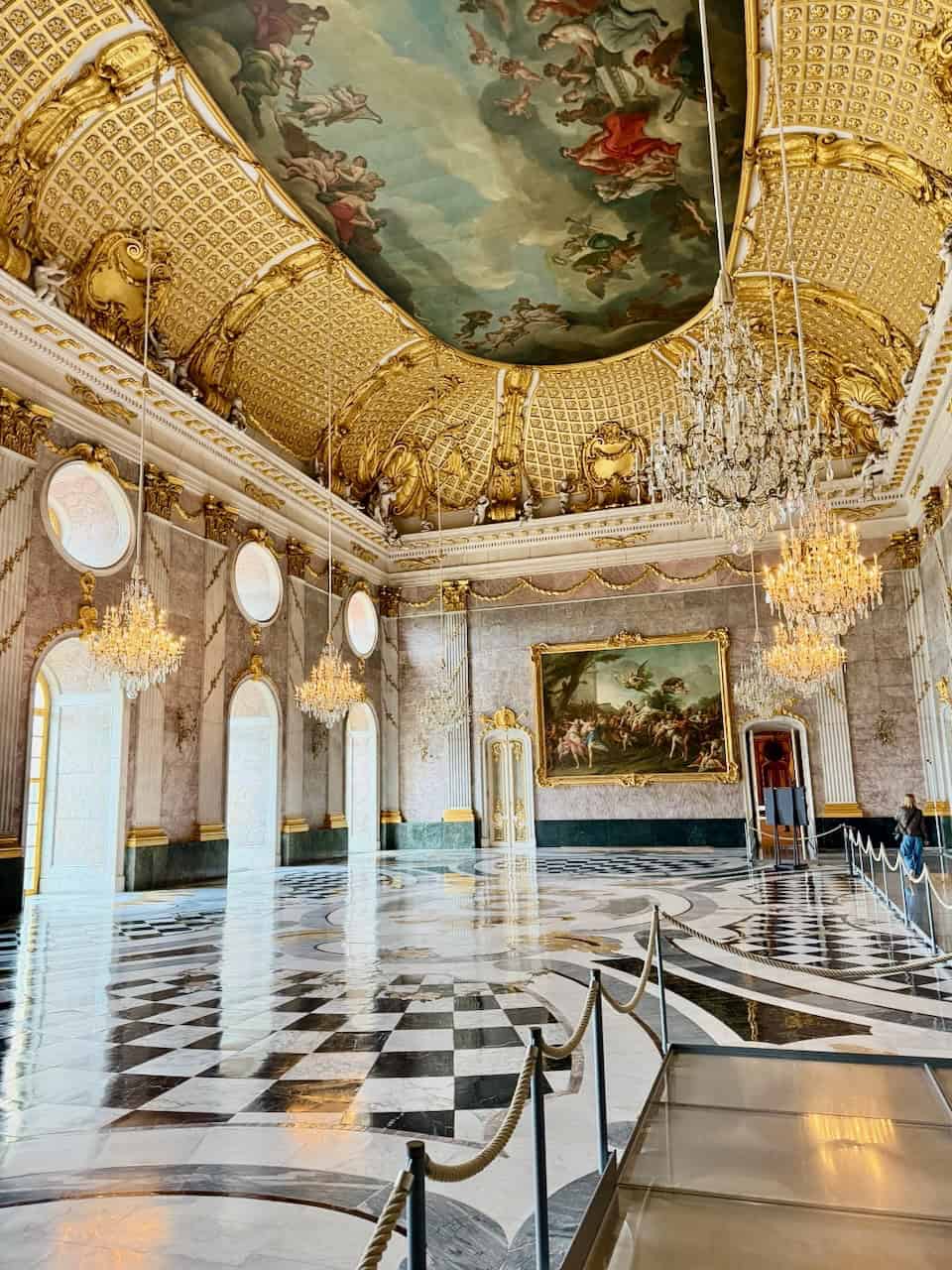
The palace’s most impressive ceremonial space is the Great Marble Hall (Marmorsaal). Clad in richly coloured marble and adorned with gilded decoration, allegorical sculptures and a grand ceiling painting celebrating the achievements of Prussia, the hall was designed to awe visiting dignitaries and demonstrate the kingdom’s growing power and prestige.
Frederick reportedly referred to the New Palace as a form of “fanfaronade“, meaning a display of bravado. Yet despite its extravagance, he rarely lived there, preferring the quieter atmosphere of Sanssouci Palace.
The Last Emperor of Germany
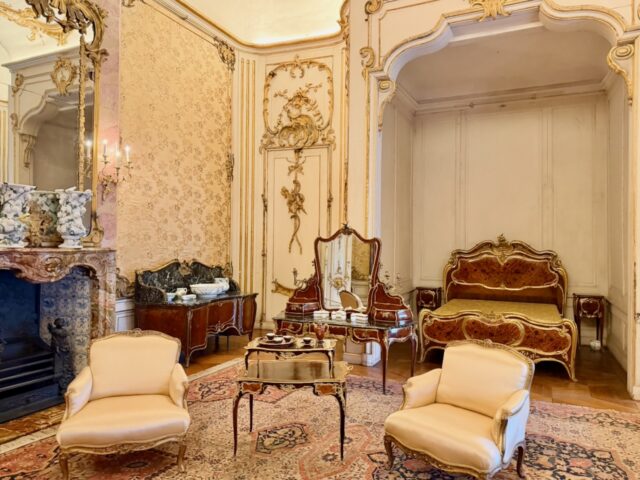
The palace was the favoured residence of Emperor Frederick III and Empress Victoria. Their son, Wilhelm II (the last Emperor of Germany), made it his home until he abdicated to The Netherlands in 1918. Unknown to many, he had much of the palace furniture transported to his new home, Huis Doorn, in The Netherlands. The furniture was discovered by the Dutch in the 1970’s and returned to Potsdam.
Other historical treasures of Sanssouci
Charlottenhof Palace
Located within the park’s southern section, Charlottenhof Palace offers a striking contrast to the Rococo splendor of Sanssouci. Built in the 1820s for Crown Prince Frederick William, later King Frederick William IV, the palace was inspired by classical Roman villas.
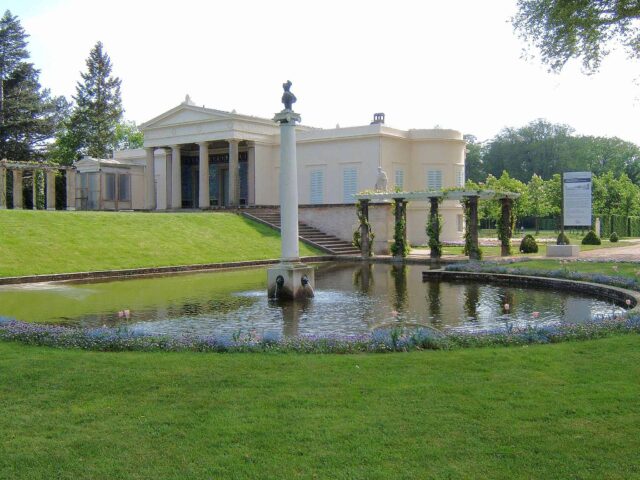
Architect Karl Friedrich Schinkel, one of Germany’s most celebrated architects, designed the elegant residence. The palace’s clean lines, harmonious proportions and serene surroundings reflect the ideals of Neoclassicism. The palace’s interior features themed rooms inspired by ancient Greece and Rome, while the surrounding gardens incorporate carefully planned vistas and ornamental features.
Roman Baths
Another notable site is the Roman Baths complex, inspired by ancient Italian villas. Designed by Schinkel and Ludwig Persius, the picturesque ensemble combines classical architecture with romantic landscaping.
Temple of Friendship
Nearby, the Temple of Friendship commemorates Frederick the Great’s beloved sister, Wilhelmine, and demonstrates the king’s devotion to family.
Orangery Palace
The Orangery Palace stands as one of the most distinctive buildings in Sanssouci Park. Constructed between 1851 and 1864 during the reign of Frederick William IV, the palace reflects the king’s fascination with Italian Renaissance architecture.
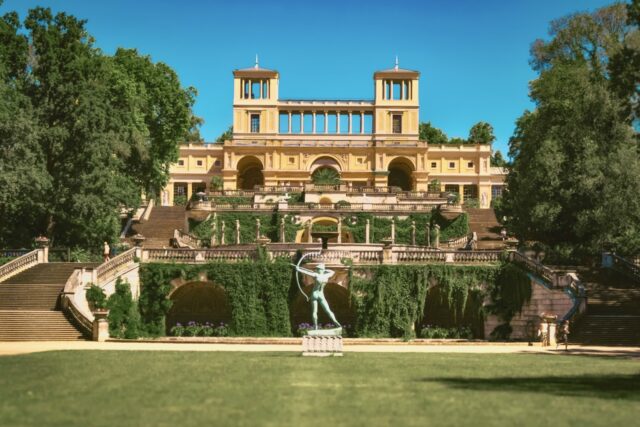
Stretching nearly 300 meters in length, the palace resembles the grand villas and monasteries of Italy. It was designed to house exotic plants during the winter months, including orange, lemon, and palm trees. Inside, visitors can view rooms decorated with copies of famous Renaissance paintings by artists such as Raphael. The palace’s elevated terraces provide beautiful views across the surrounding gardens.
The Gardens and Park Landscape
The true magic of Sanssouci lies not only in its palaces but also in its extraordinary landscape. The park evolved over more than a century, resulting in a rich blend of formal Baroque gardens, naturalistic English landscapes and ornamental features.
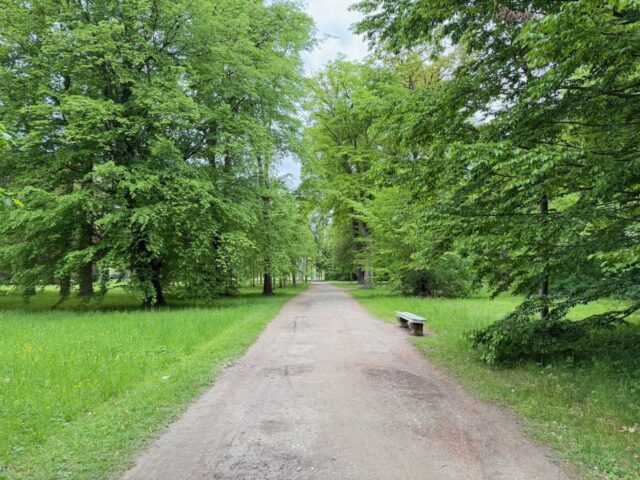
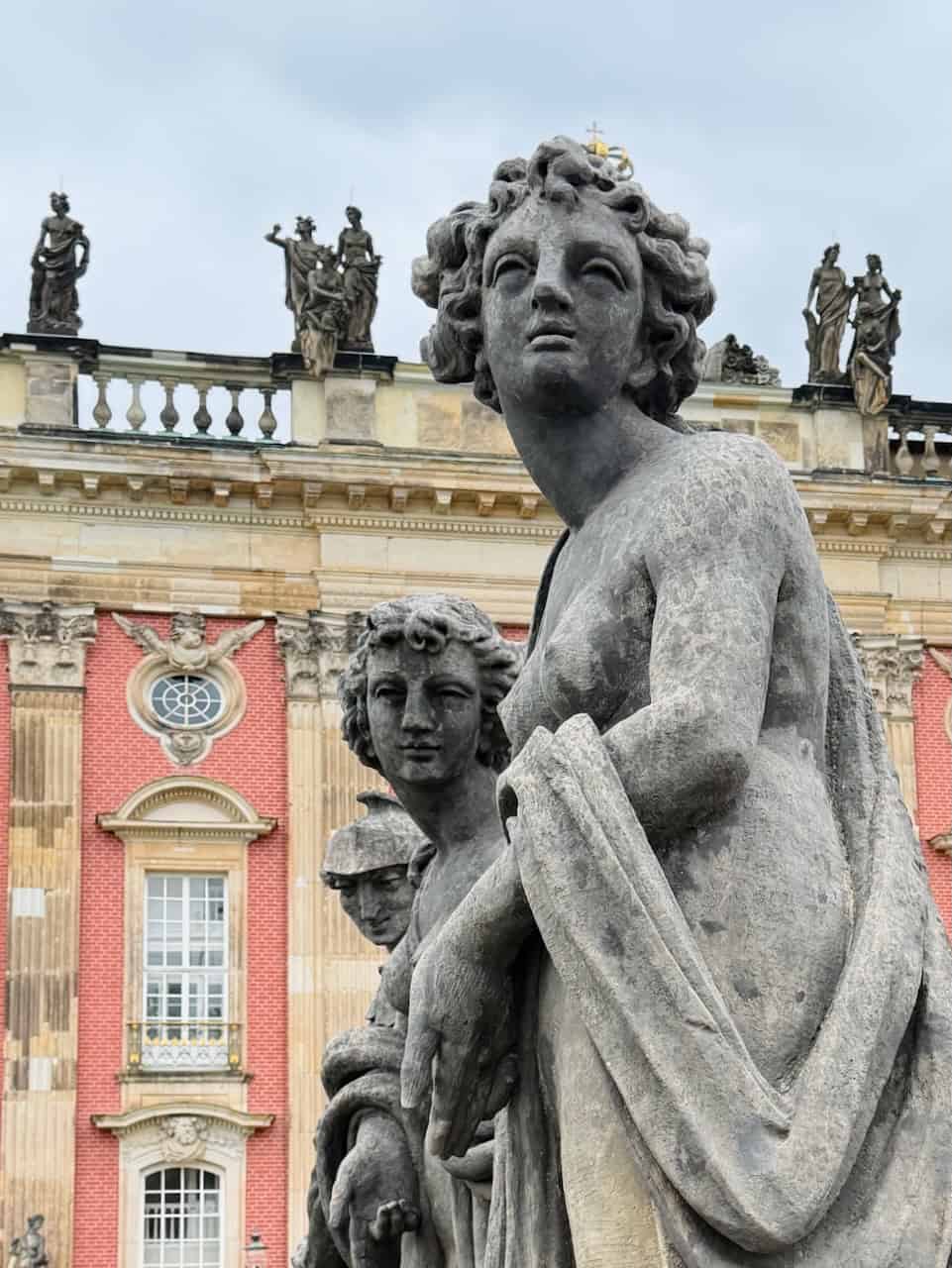
The famous terraced vineyards below Sanssouci Palace remain one of the park’s defining images. During the warmer months, fountains, flowerbeds and tree-lined avenues create wonderful scenery for visitors. Throughout the grounds, you’ll encounter statues, obelisks, temples and hidden garden pavilions. Each path reveals a new perspective, making the park as much an artistic masterpiece as the buildings themselves.
The legacy of Sanssouci
The Sanssouci Palaces and Parks offer far more than a collection of historic buildings. Together, they tell the story of Prussia’s rise, the ambitions of its rulers and the evolution of European art and architecture across two centuries. It’s an awe-inspiring complex with a rich history, that deserves to be enjoyed at a slower pace.