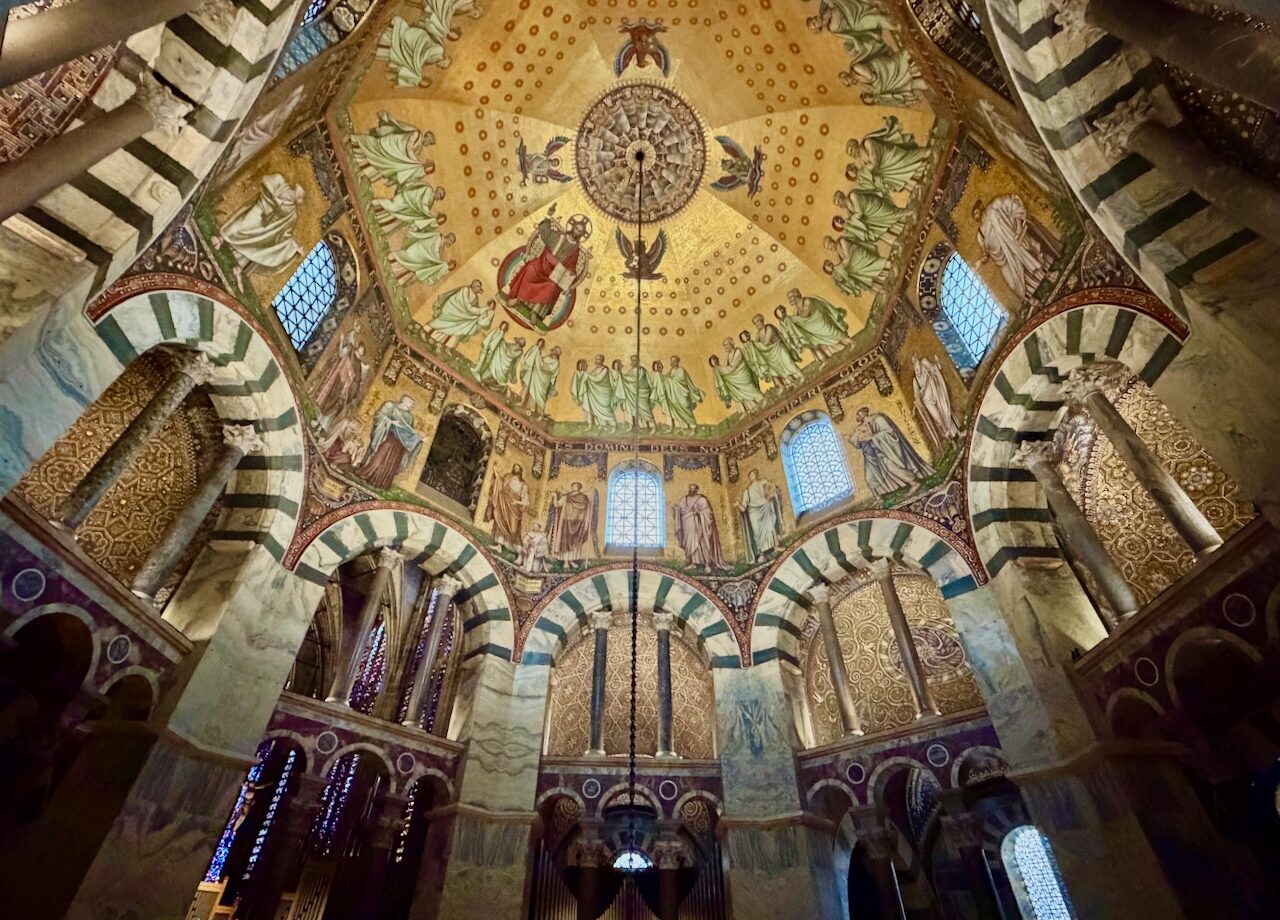
Aachen is a historic city in western Germany near the border with The Netherlands and Belgium. Though a relatively small city, it has a historical significance that echoes across Europe. It played an important role in the Holy Roman Empire and was a political and religious centre during the Middle Ages. These days, visitors flock to Aachen to admire its historical buildings and explore its medieval lanes. I’ve been there several times and I’ll never tire of its stunning Cathedral, lively squares and charming streets. It’s a city I would recommend to anyone. Whether you’re a history buff, culture lover, or foodie, Aachen delivers a wonderful array of experiences in a walkable city centre. Aachen is also famous for its Christmas markets – a great reason to visit during the festive season. Here are the top things to see and do in Aachen, as well as a self-guided walking tour.

A brief history of Aachen
Aachen’s roots go back to Roman times, when it was known as Aquisgrani and prized for its thermal springs, which can still be seen (and experienced) today. Its greatest historical significance stems from the reign of Charlemagne (late 8th–early 9th century). Charlemagne was historically significant for uniting much of Western and Central Europe in the early Middle Ages, and laying the political and cultural foundations of what later became the Holy Roman Empire and modern Europe. King of the Franks and later Emperor of what became known as the Carolingian Empire, Charlemagne chose Aachen as his primary residence. There he built an imperial palace, a throne room and the world famous Palatine Chapel, the nucleus of today’s Aachen Cathedral. Charlemagne was buried in the cathedral in 814, and his influence made the city a political and spiritual centre of medieval Europe.
For nearly six centuries (from 936 to 1531), German kings and emperors were crowned in Aachen Cathedral, cementing the city’s role at the heart of the Holy Roman Empire. Since those imperial days, Aachen has weathered wars, fires and changing rulers – including French occupation in the late 18th century and heavy fighting in World War II – yet its rich heritage survives in its streets, architecture and museums.
Things to see in Aachen – walking tour
The map below highlights things to see and do in Aachen. I’ve also included a walking route through the historic city centre. This sightseeing walk starts at Elisenbrunnen and ends at the Ponttor, one of the city’s two surviving medieval gates. Scroll down to read more about the attractions along the way, the sequence of which mirrors the walking route. Alternatively, you can opt for a 1.5 hour guided walking tour.
Elisenbrunnen
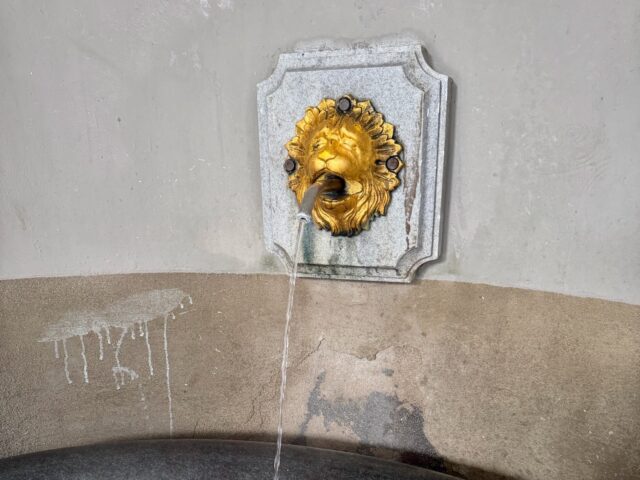
My self-guided Aachen walking tour starts at Elisenbrunnen. This neoclassical pavilion houses the city’s tourist office and thermal springs. Visitors can taste the mineral waters here and see the sulphuric steam billowing from nearby manholes.
Elisengarten
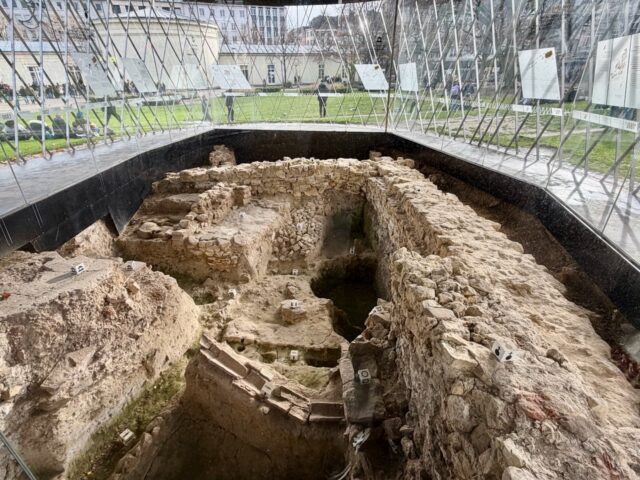
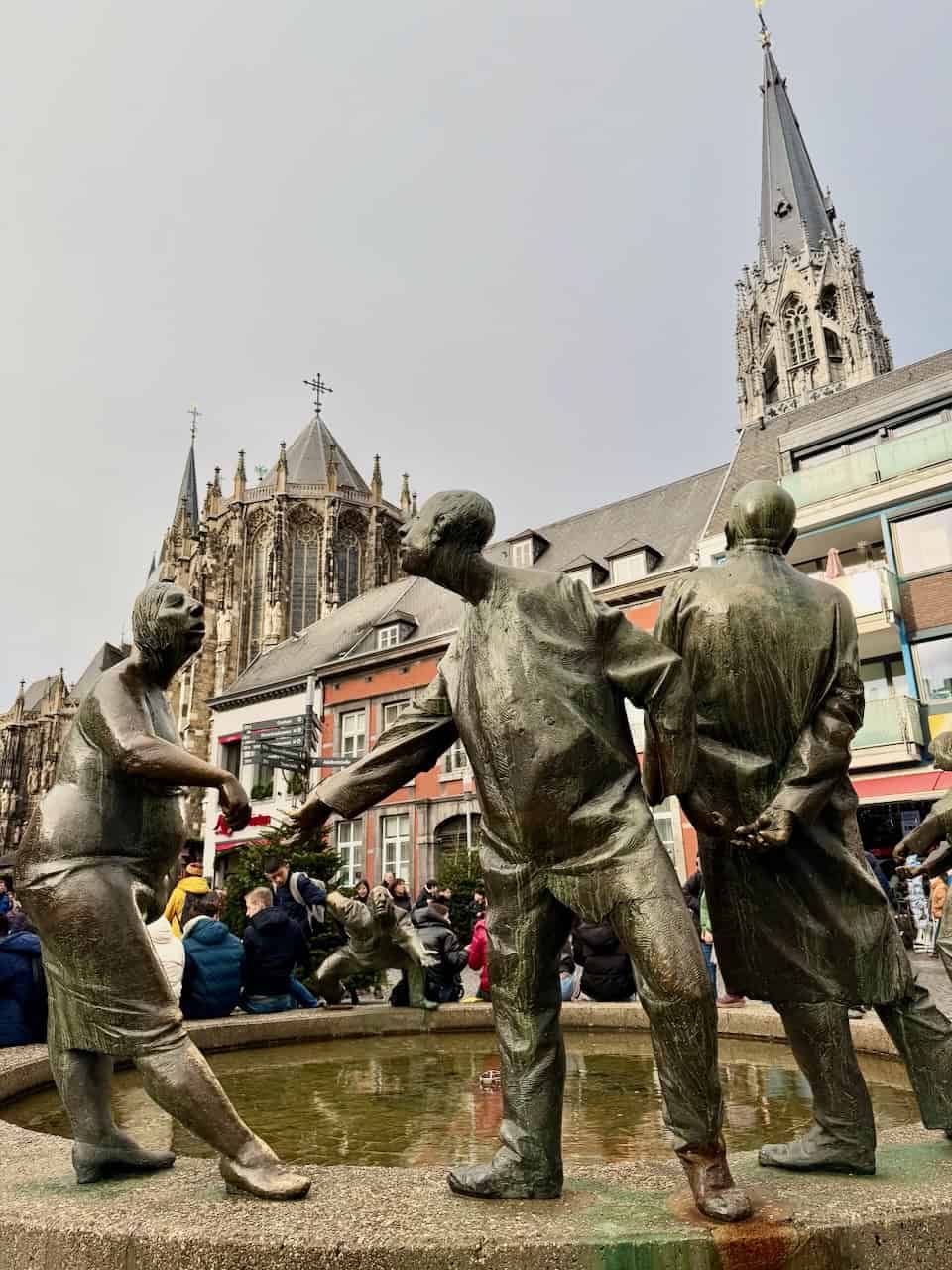
This small park is popular amongst both locals and visitors. There are two attractions at the park: the ‘Archeological Window’ and the humourous Kreislauf des Geldes (Cycle of Money) fountain.
Münsterplatz and surrounds
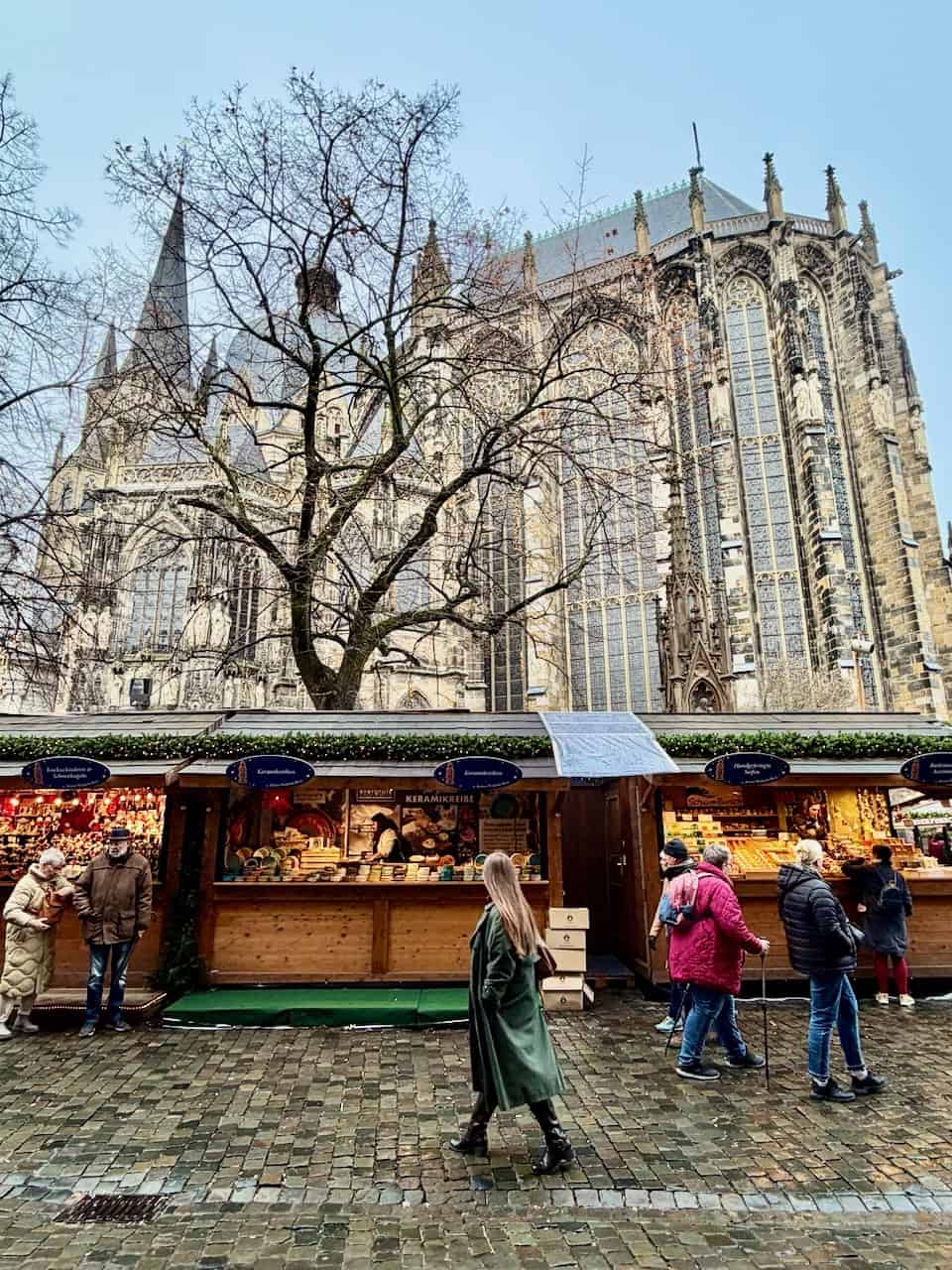
The next stop on this Aachen walking tour is one of the main squares in the historic city centre: Münsterplatz. The site of one of the Christmas markets, Münsterplatz is packed with cafés and is overlooked by the imposing Cathedral.
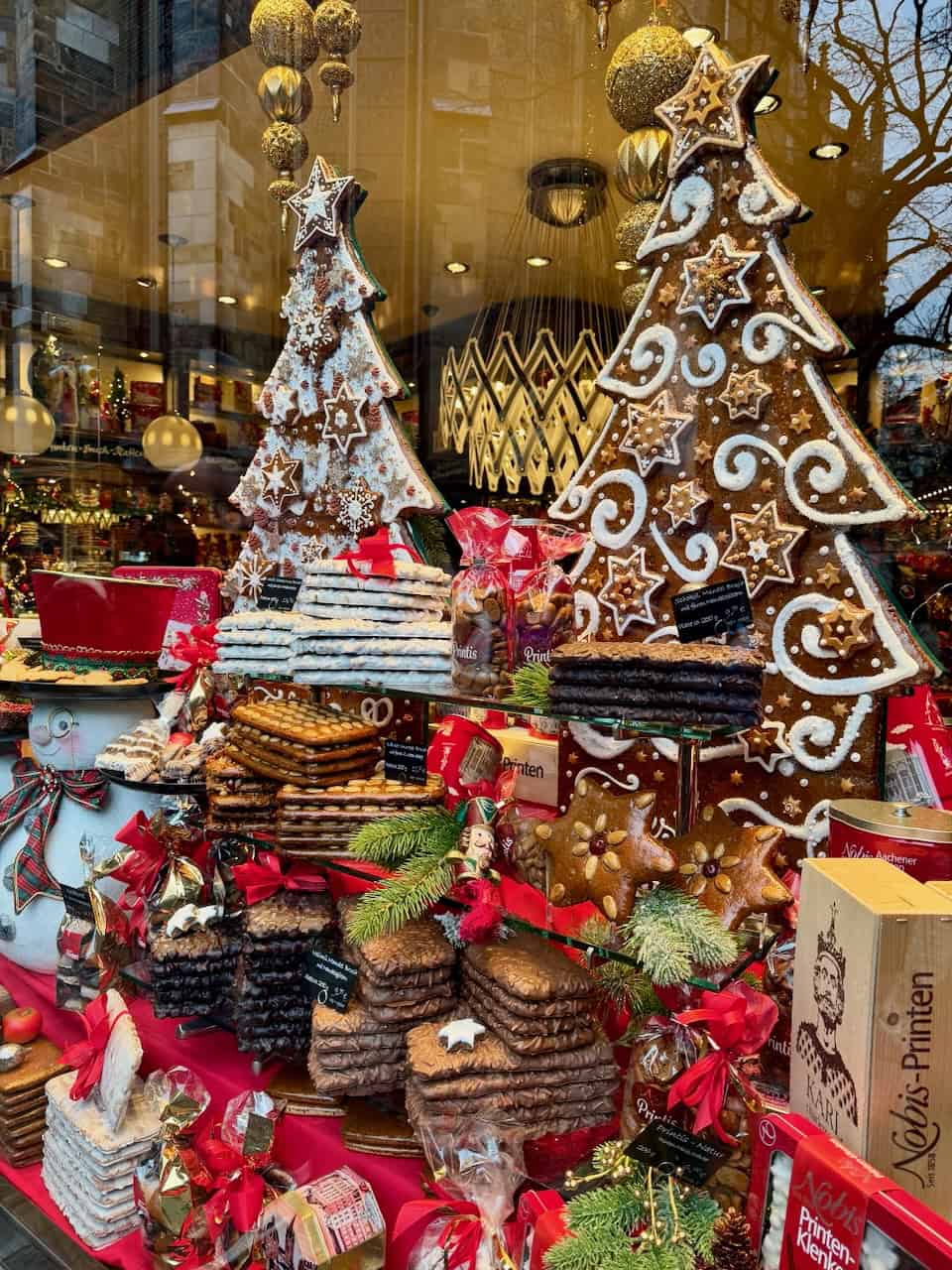
In the eastern corner of the square, behind the Cathedral, you’ll find Nobis Printen, one of the city’s iconic bakeries. Ask for a tasting of printen, a spiced gingerbread from Aachen, and bring some home with you.
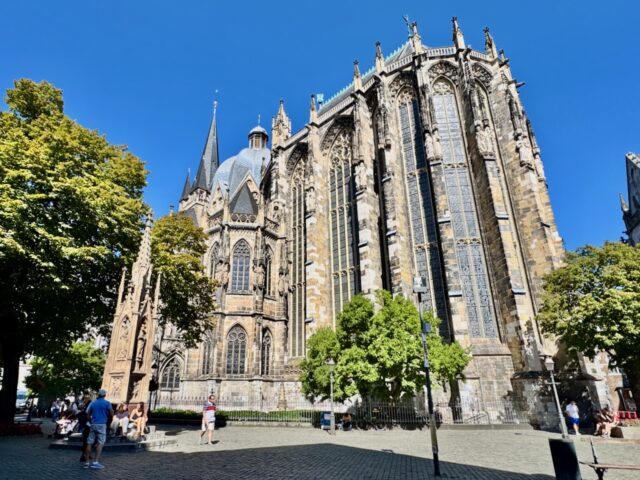
Have a look at the Cathedral from the intersection of Spitzgässchen and Domhof. This is a great spot to see the evolution of the Cathedral, and the various architectural styles, over the centuries.
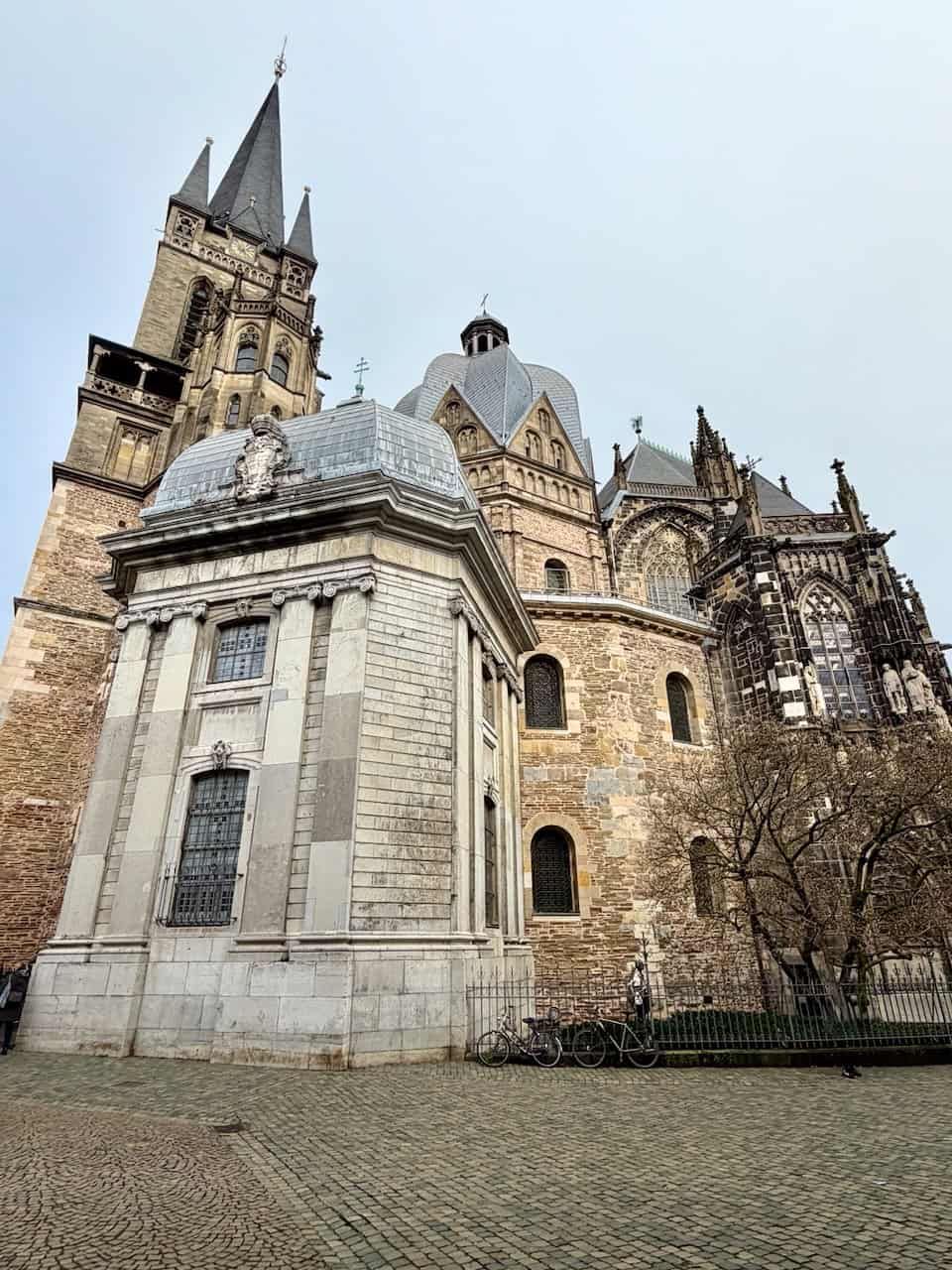
In Schmiedstrasse, you’ll find the medieval Grashaus, one of the oldest non-religious buildings in Aachen.
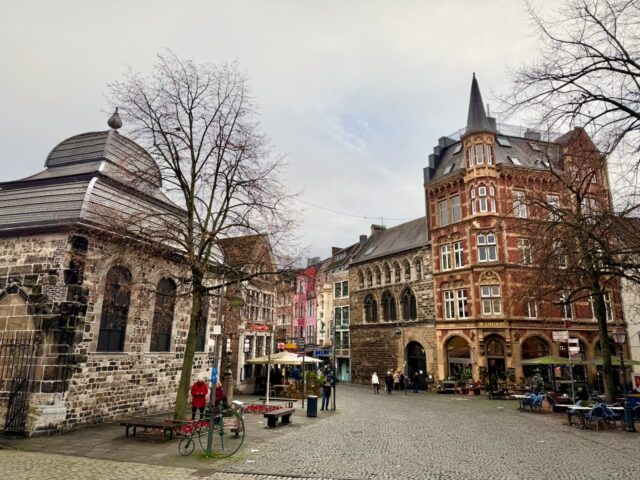
Aachen Cathedral
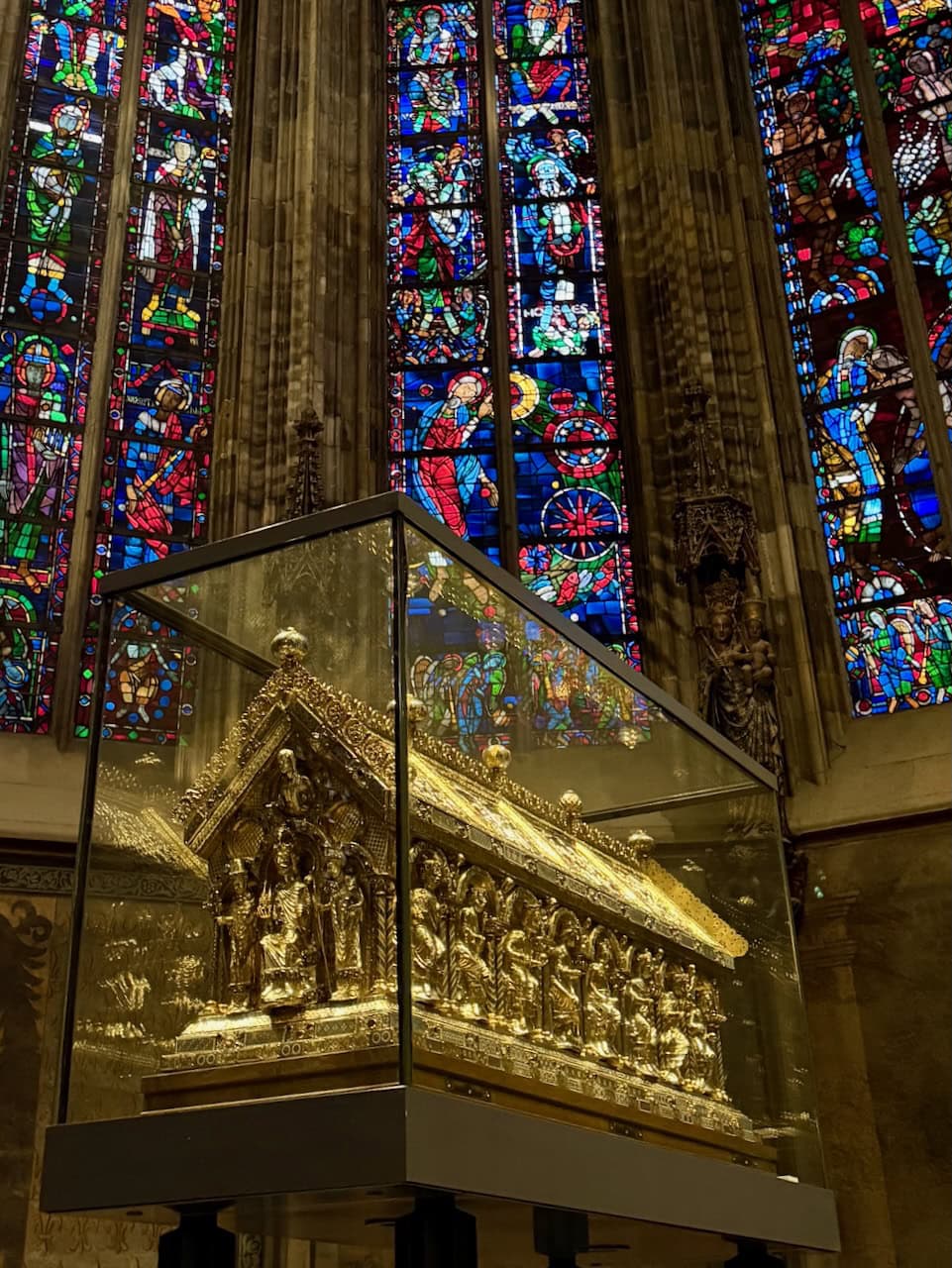
This leads us to the absolute highlight of Aachen: the Cathedral. From Domhof, a square fronting the Cathedral entrance, you’ll see the original Carolingian façade. There are two ways to see the Cathedral: free entrance and a guided tour. I recommend the guided tour – tickets can be purchased at the Dominformation (Cathedral Info Office, Johannes Paul II Strasse 1) – as you get to see more of the Cathedral, including Charlemagne’s throne on the upper floor and the choir hall with the shrine of Charlemagne.
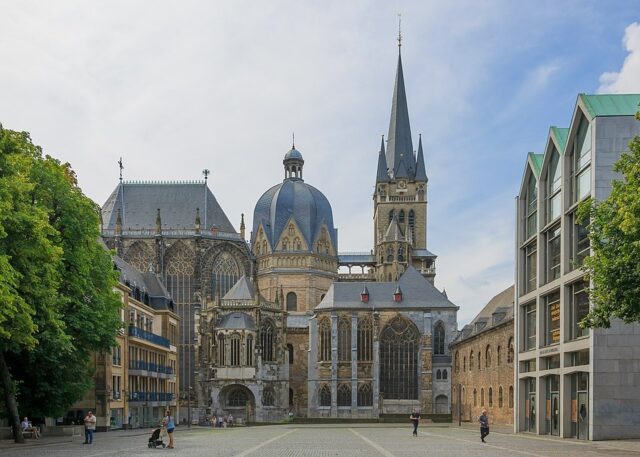
The Cathedral’s origins lie in the 8th century, when Charlemagne commissioned the construction of the Palatine Chapel. This octagonal structure, with its soaring dome and mesmerising arches, is truly breathtaking. Inspired by the 6th-century Basilica di San Vitale in Ravenna, the chapel is richly decorated with marble, frescoes and dazzling mosaics.
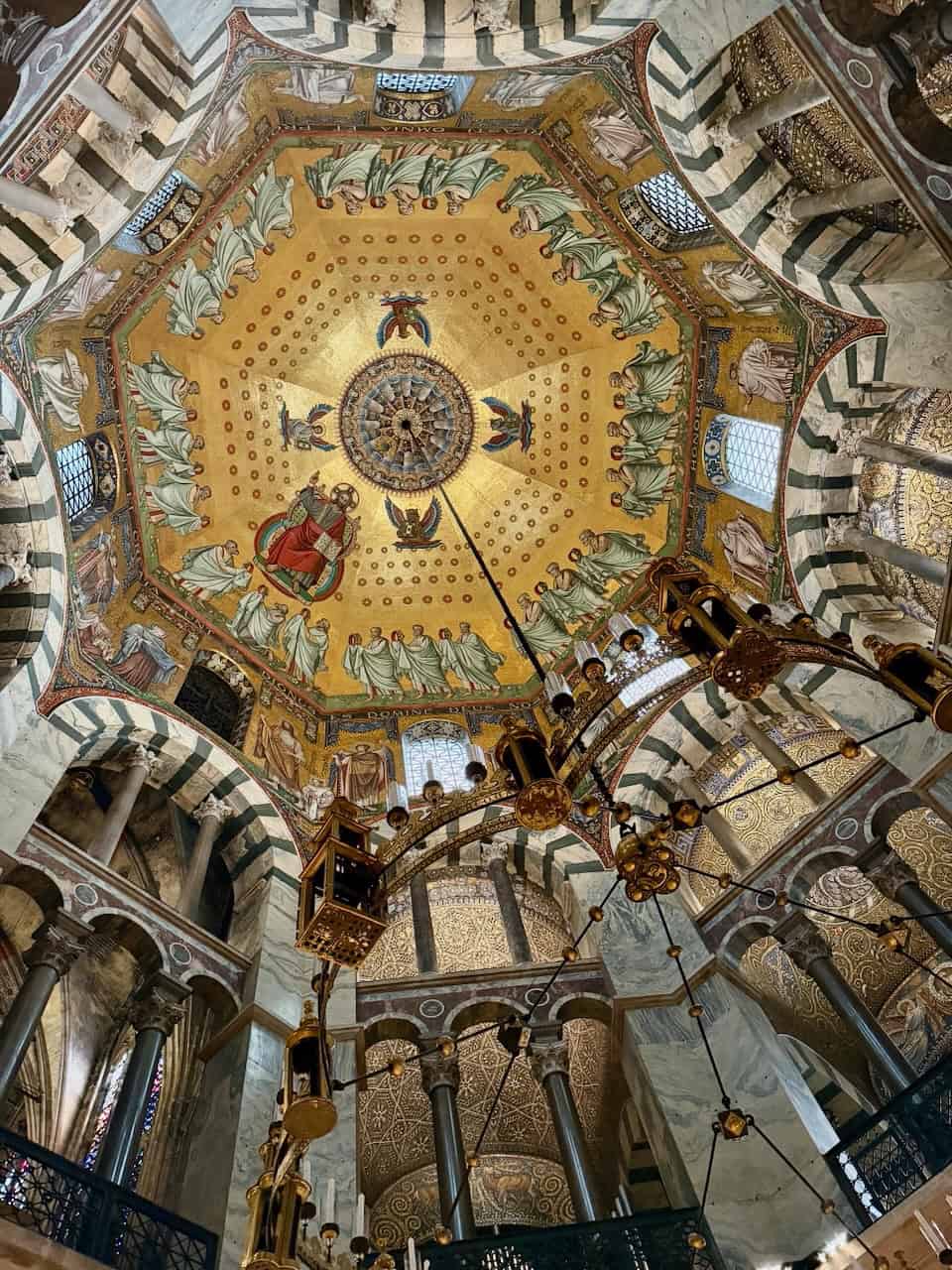
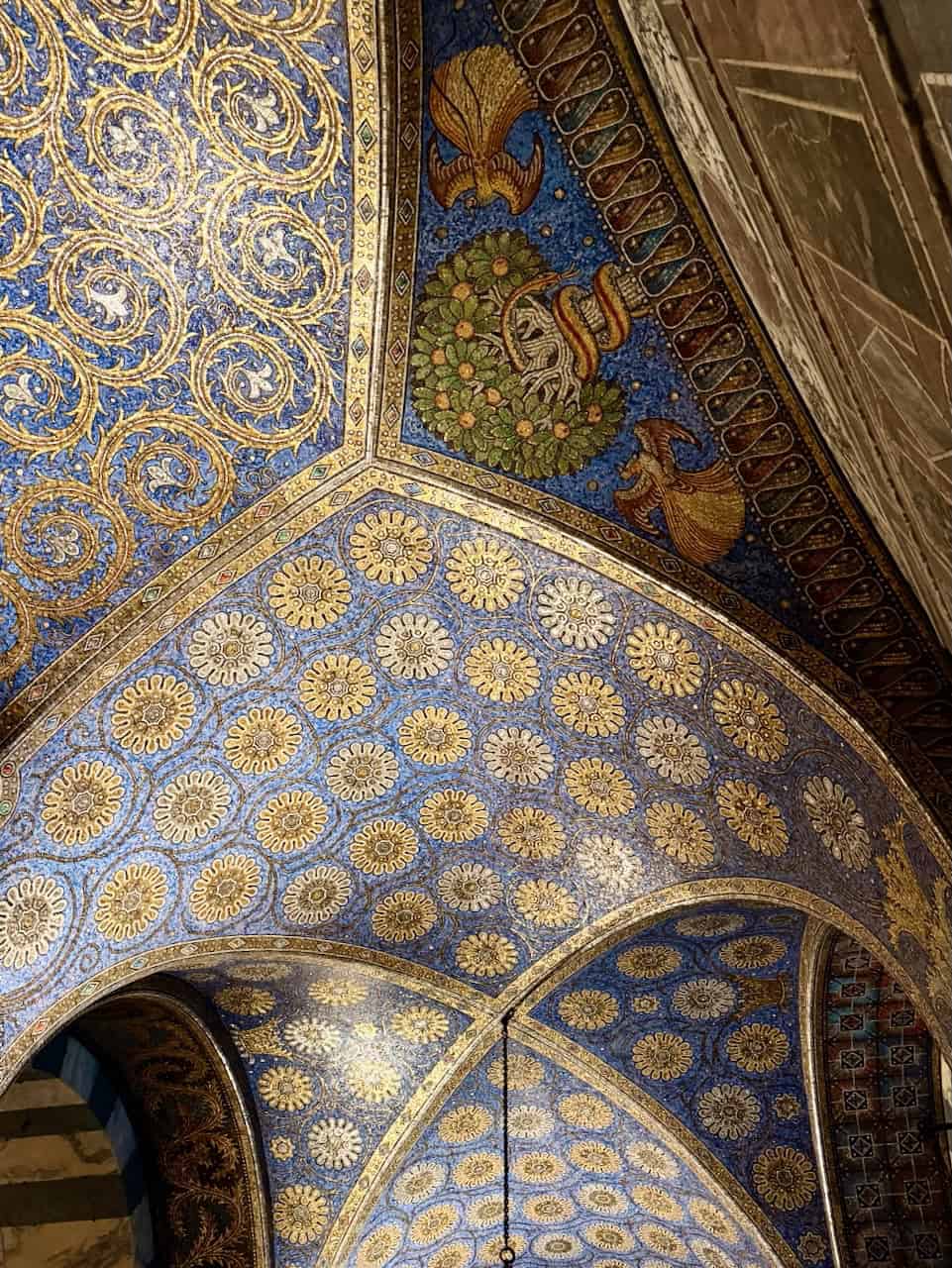
Over the centuries, new sections were added to the chapel, including the choir hall, creating the Cathedral we know today. In 1978, Aachen Cathedral became the first site in Germany to be inscribed on the UNESCO World Heritage list.
Cathedral Treasury
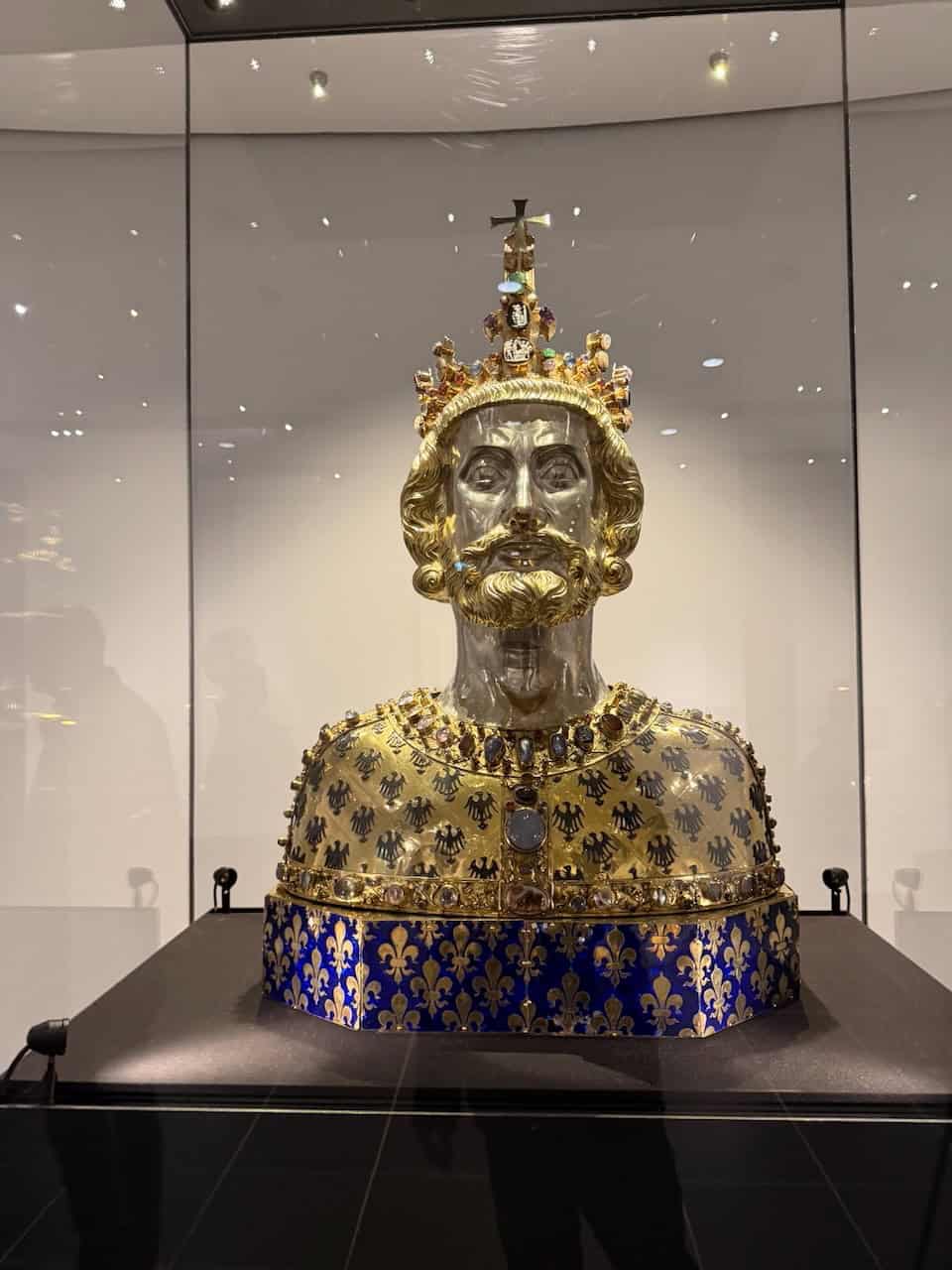
I also recommend visiting the adjacent Domschatzkammer, or Cathedral Treasury. You’ll find the entrance opposite the Cathedral Info Office. The Treasury displays one of northern Europe’s most impressive collections of medieval religious artifacts.
Katschhof and Charlemagne Centre
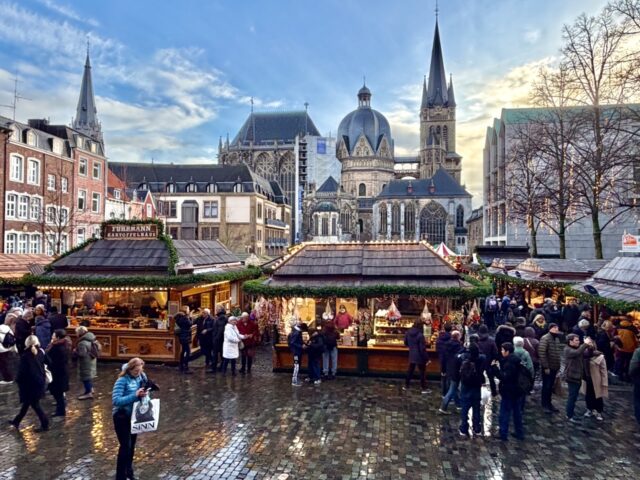
A short stroll away lies Katschhof, a large square often referred to as Aachen’s “living room”. It regularly hosts events and concerts and is the site of a large Christmas market during the festive season. The square is framed by some of the city’s most iconic landmarks, including the Cathedral and the Rathaus, as well as the Charlemagne Centre, a museum dedicated to Aachen’s history. From the steps of the Rathaus, there’s a stunning view of the Cathedral’s distinctive silhouette.
Puppenbrunnen
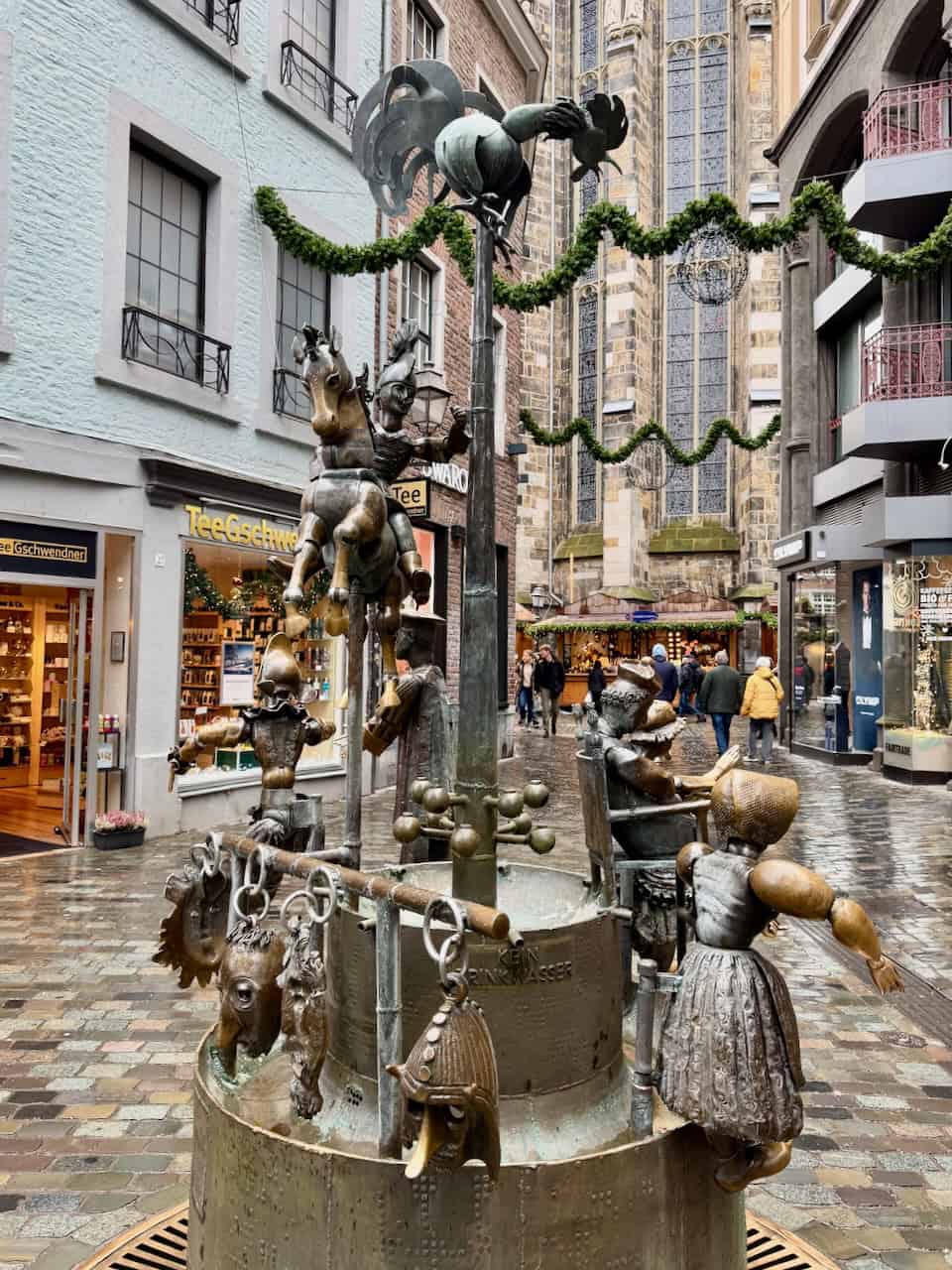
From Katschhof, continue through several charming lanes in the direction of Hof (square). At the entrance of the square, stop at the quirky Puppenbrunnen (Puppet Fountain), one of Aachen’s most beloved fountains. The figurines can be twisted and bent to change the look of the fountain.
Hof
One of the smaller squares in Aachen, Hof is home to a reconstruction of a Roman colonnade as well as a row of charming medieval houses. There are numerous cafés here, such as Domkeller, which are well worth a visit for a taste of the local wines and ambiance.
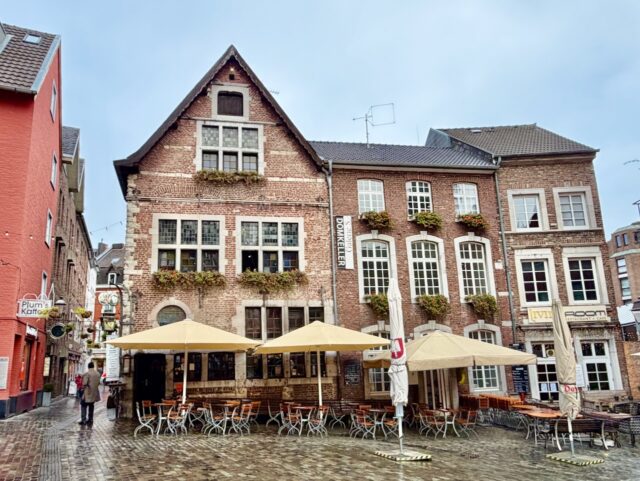
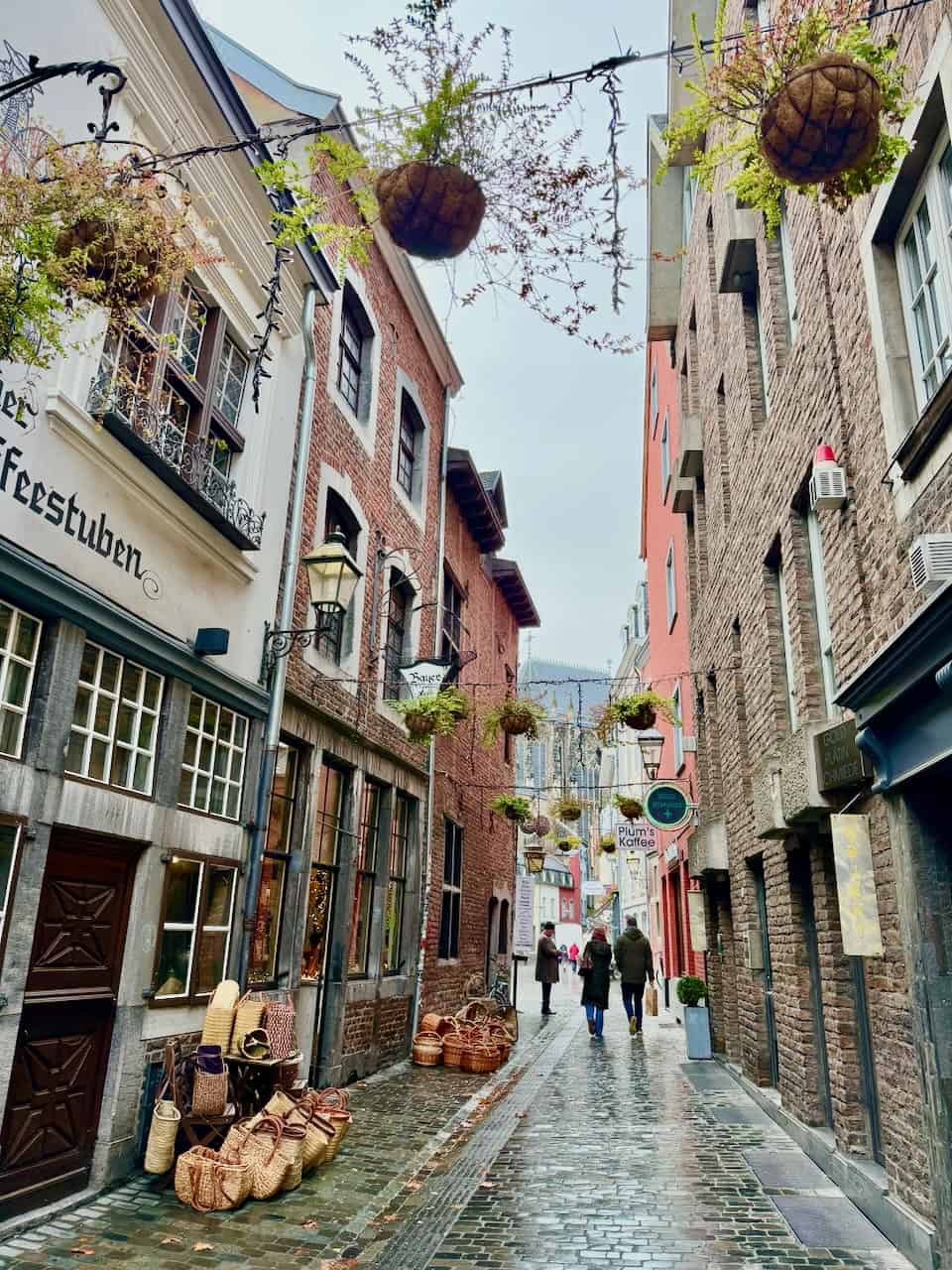
Leading off from Hof are the Rommelsgasse and Körbergasse, two picturesque medieval lanes.
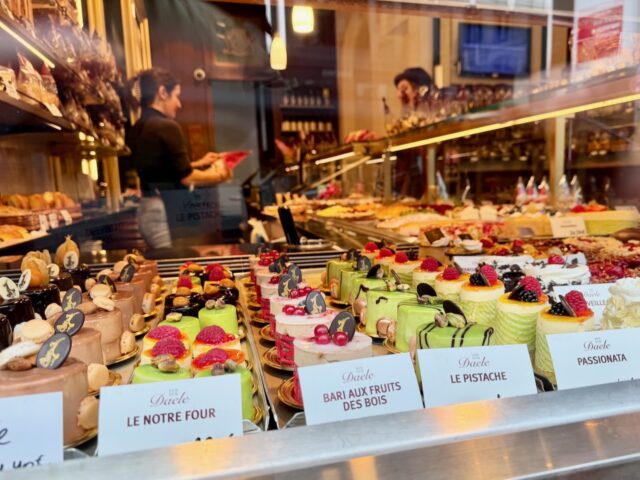
At the end of Körbergasse is one of Aachen’s most famous cafés: Van den Daele. This Belgian café serves a variety of delicious pastries and cakes.
Hühnemarkt
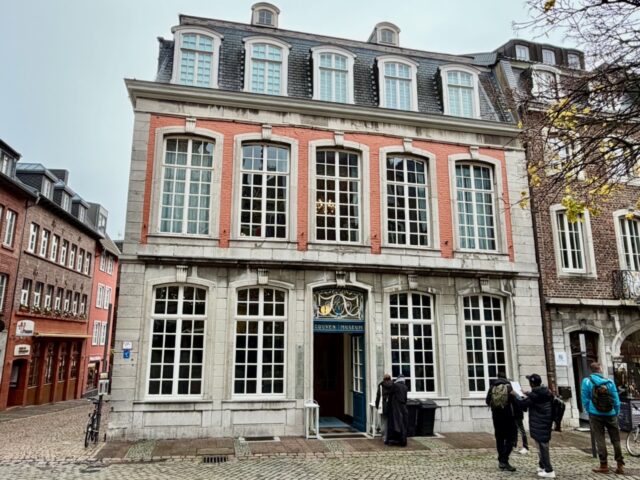
From Hof, walk up Rommelsgasse to Hühnemarkt. At this square, you’ll find a statue of the ‘Chicken Thief’ as well as the Couven Museum, a restored 17th century mansion. This museum showcases period interiors, furniture, and even an old pharmacy – a fascinating look at bourgeois life in historic Aachen.
Granusturm
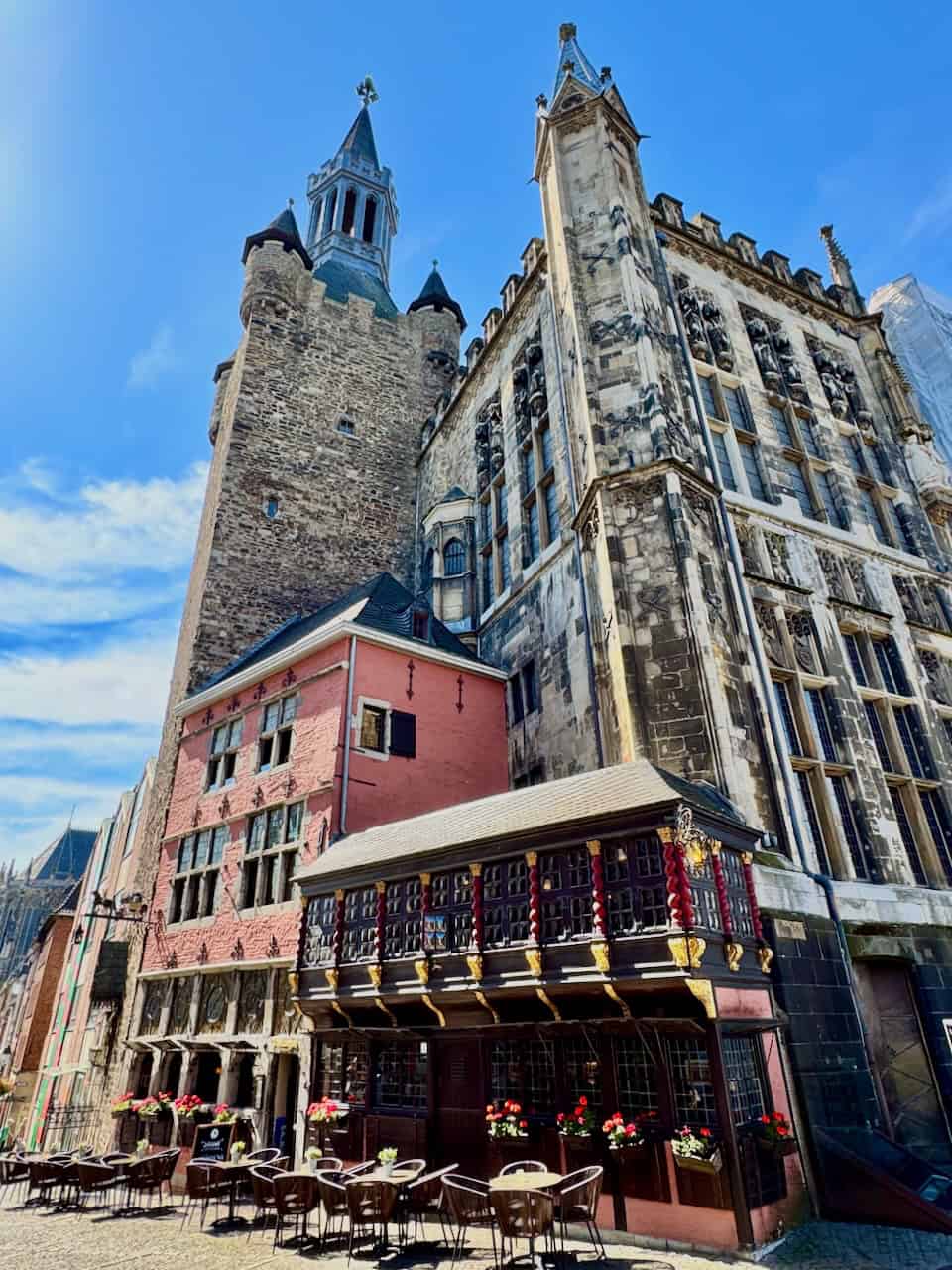
Across the street, you’ll quickly spot the Granus Tower, one of the oldest surviving structures of Charlemagne’s former imperial palace, and the charming medieval façade of the Postwagen zum Ratskeller restaurant.
Markt and Rathaus
You’ll soon arrive at Markt, the city’s market square. In the middle of the square stands the Karlsbrunnen (Charles’s fountain). The main attraction at this square is the magnificent Rathaus (Old Town Hall). Built on the foundations of Charlemagne’s imperial palace, this 14th century town hall has a striking Gothic exterior. Inside, you’ll find an impressive Coronation Hall, with its frescoes and imperial regalia.
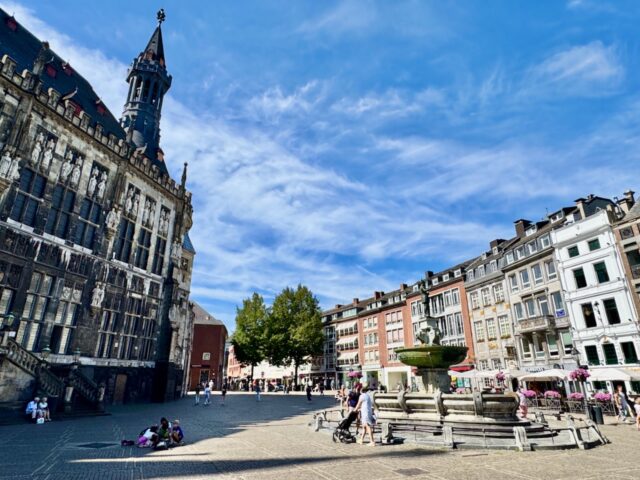
There are numerous cafés and restaurants at Markt which are worth mentioning. These include Markt 43 (contemporary European) and the atmospheric Zum Goldenen Einhorn (German cuisine).
Ponttor
From Markt, walk along Pontstrasse towards the Ponttor, a 10-minute walk. One of only two medieval gates that can be seen today, Ponttor is a formidable sight.
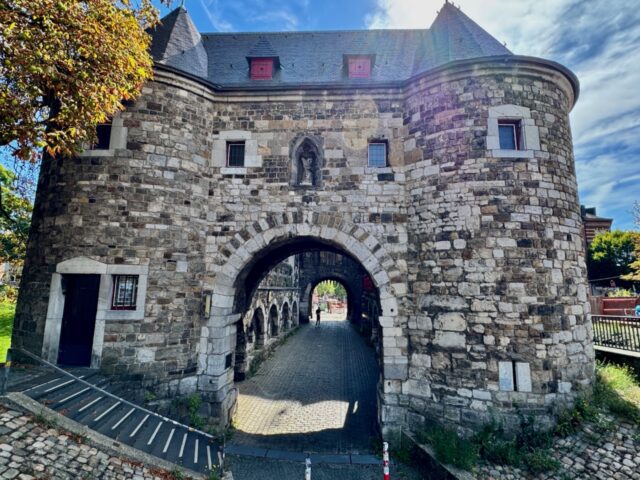
This concludes my Aachen walking tour. From the Ponttor, I suggest making your way back to Markt or Münsterplatz for a well-deserved refreshment or meal.
This walking route can easily be covered in a day but I recommend staying a night in Aachen to experience the enchanting evening ambiance, have a drink at a local pub and dine at one of its wonderful restaurants. Search for accommodations in Aachen.
Where to eat in Aachen
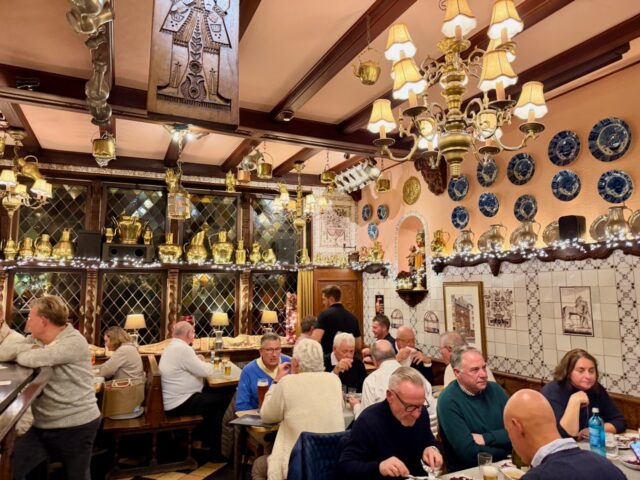
There are many cafés and restaurants in Aachen to choose from. In addition to Markt 43 and Zum Goldenen Einhorn (Markt), I can also recommend Am Knipp (Bergdriesch, 3). Housed in a 17th century house, you’ll find hearty German cuisine, beers and wines.
Experience Aachen’s thermal springs
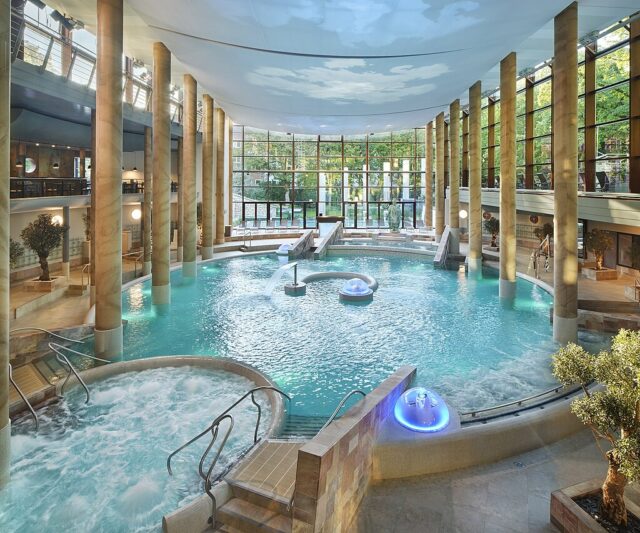
One other thing to do in Aachen is to experience one of its thermal springs. The most popular wellness spa is the Carolus Thermen. Located about a 25-minute walk from Münsterplatz (or a 10-15 minute taxi ride), this beautiful thermal spa has numerous pools, saunas and restaurants.
How to get to Aachen
Aachen is located in the far western corner of Germany, near the Dutch and Belgian borders. From Maastricht (The Netherlands), it’s a 45-minute car/bus ride away. It takes about 1.5 hours by train from Brussels. From Cologne, the ICE high-speed train will whisk you there in 35 minutes (or 55 minutes on regional trains). Frankfurt is a 1 hour 45 minute train ride (ICE service) away.
If you’re coming by car, I suggest parking at Parkhaus am Dom (see map above).
Read more about other Historic Cities of Germany
- Things to see in Tübingen
- Things to see in Trier
- Things to see in Lübeck
- Things to do in Heidelberg
- Things to do in Koblenz
Note: my visit to Aachen was made possible in partnership with Historic Highlights of Germany. As always, all views expressed above are mine, and mine only.